
Murata Ken'ichi (村田兼一) was born in 1957 (year 32 of the Showa era) in Osaka, Japan, and is a singular, provocative photographer of the contemporary Japanese erotic scene.
His work stands as a bridge between the tradition of erotic ukiyo-e (shunga) and modern explorations of fetishism, psychoanalysis and mythology, in which the female body becomes a canvas for dreamlike, dark narratives.
Over almost three decades, Murata developed an unmistakable style: black-and-white photographs that are later hand-colored by the artist Yamasaki Yumiko (born in 1975, also in Osaka), which gives the images a painterly, surreal quality that evokes both the delicacy of a dream and the rawness of a nightmare.
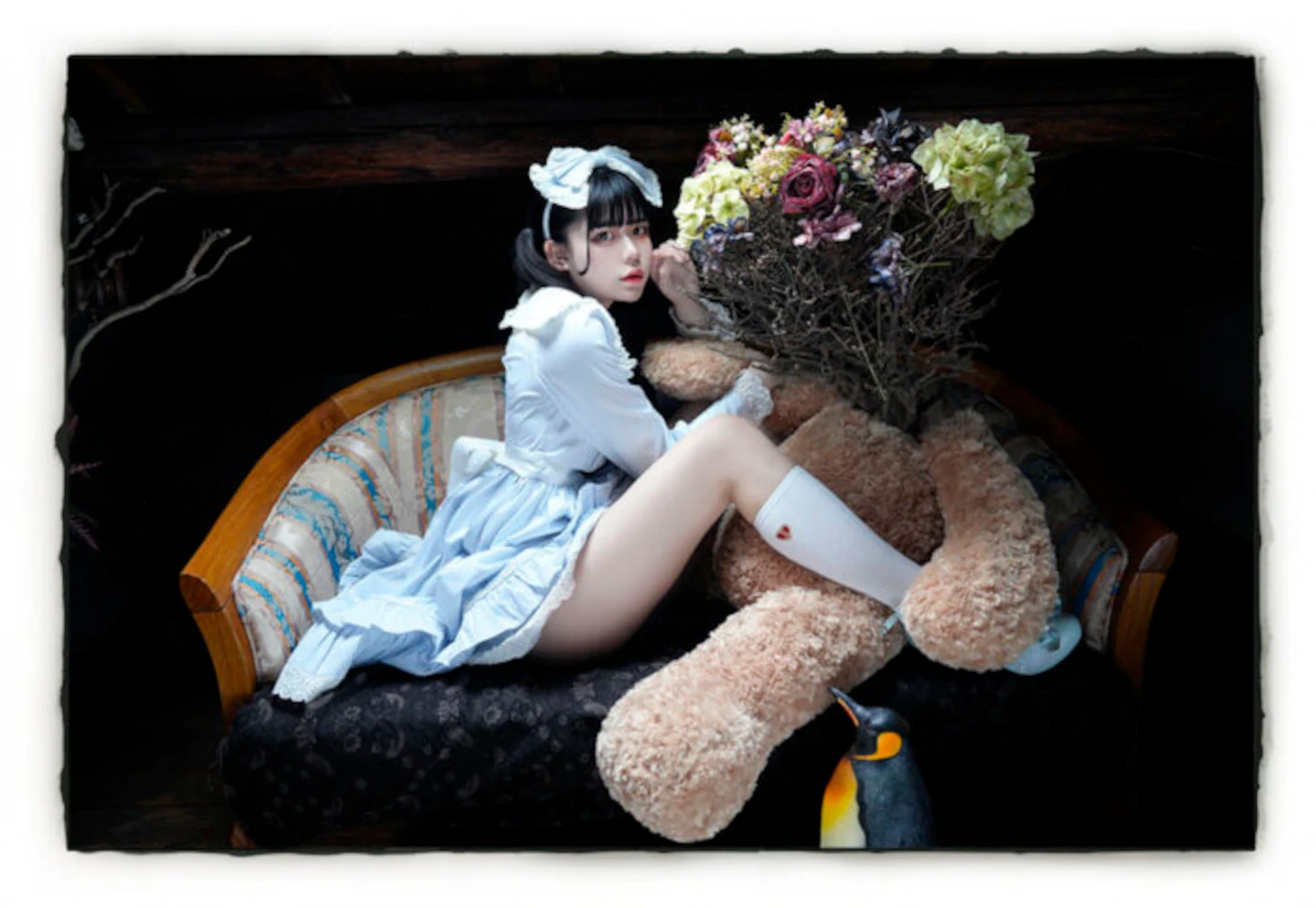
This hand-tinted print technique not only brings out the texture of the skin and the fantastical elements—such as tentacles, vines or horns—but also underscores his central theme: the dialectical tension between Eros (the drive for life and sex) and Thanatos (the drive toward death and dissolution).
His creative process is deeply marked by an anxiety neurosis that has afflicted him since the age of ten, rooted in an existential dread of death.
“When I was ten, I realized that ‘humans will die someday.’ And I was so terrified that I couldn’t leave the house. Since then I have suffered from anxiety neurosis and have lived with it,” Murata confesses in interviews and in the introductions to his books.
This autobiographical confession is not a mere anecdote: it permeates his entire output, turning photography into an act of catharsis and resistance.
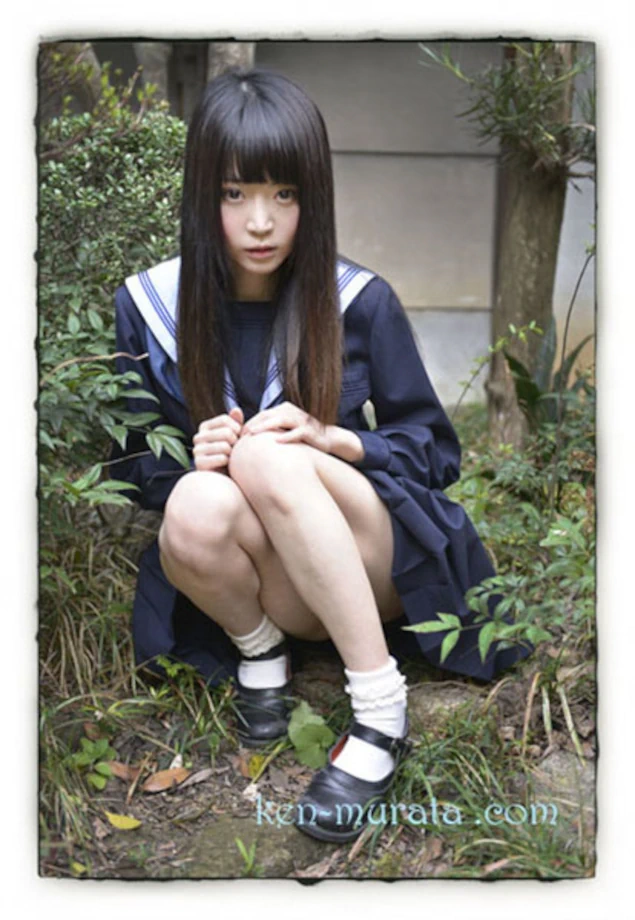
In his early series, eroticism works as an antidote: ties (shibari or bondage with ribbons and ropes), partial nudity and costumes (school uniforms, torn kimonos, butterfly wings) celebrate the vitality of the body in the face of nothingness.
As his career progresses, however—especially in the last decade, marked by health problems—the work evolves toward a resigned acceptance of the inevitable, in which seduction takes on a tinge of melancholy and the “princesses” of his fairy tales become ambiguous goddesses of decay.
Murata is not a mere fetishist; his work is a satirical reinterpretation of fairy tales and classic myths, exposing the repressed eroticism in narratives such as Snow White, Sleeping Beauty or biblical legends such as Lilith.
Influenced by photographers such as Araki Nobuyoshi (for explicit bondage) and Hosoe Eikoh (for bodily symbolism), but with a more narrative and colorful approach, Murata builds settings where the appearance of innocence collides with the forbidden: adult models styled with a lolita aesthetic appear alongside elements with phallic connotations—rubber hoses that evoke hentai tentacles, vines sprouting from the body—or wrapped in silk shrouds that suggest both protection and burial.
This ambivalence—purity versus depravity—critiques the passive idealization of women in children’s literature, turning his images into “colors of a bad dream” that point to Japanese visual culture’s obsessions with female genitality and human-animal hybridization.
Career and creative process
Murata’s career falls into phases that reflect his inner struggle with mortality, with milestones marking the transition from erotic exuberance to elegiac introspection.
Beginnings and training (nineties)
Although there are no precise records of any formal training in photography, Murata began experimenting in the 1990s, influenced by the rise of postmodern eroticism in Japan.
His first solo exhibition, Ranbo na Hime-tachi (“Violent Princesses,” 1996, Gallery Delta Mirage, Tokyo, curated by Iizawa Kotaro), introduced his signature: young women in fantastical settings, with touches of symbolic violence and veiled eroticism.
This series, which traveled to Kyoto in 1998, established his collaboration with Yamasaki, whose skill at coloring adds a veil of unreality that softens the grotesque.
The process was intuitive: Murata photographed “special” models in the studio (such as the recurring Nanano, 七菜乃, whose anatomy—extreme thinness, an ethereal, almost doll-like appearance—amplifies vulnerability), and Yamasaki stepped in during post-production to heighten the mythical elements.
International rise and the “princess” theme (2000–2010)
The 2000s consolidated his global fame.
Exhibitions such as Himegimi-tachi no Hakobune (“The Ark of the Princesses,” 2000, Gallery Nadar, Osaka) and Yami ni Sumu Shojo-gami (“Adolescent Goddesses Who Dwell in Darkness,” 2003, Gallery Miryu, Tokyo) explored the reinterpretation of myths. In 2005, Japanese Princess (Edition Reuss, Germany) marked his breakthrough in the West, with limited editions that sold quickly in European galleries.
They were followed by Princess of Desire (2007) and Naked Princess (2010), a trilogy obsessed with the signifier hime (“princess”): female bodies as portals to underworlds where mythical abduction—by monsters or natural forces—symbolizes rebirth through trauma.
A key moment was his exhibition in Rome (Mondo Bizzarro, 2006–2007), which exposed his work to non-Japanese audiences and sparked debates about erotic orientalism.
At this stage, his creative process became narrative: each series started from a tale (e.g., The Frog Prince, 2007–2010), with storyboards guiding the session and emphasizing the heroine’s “strong liberation” after her assimilation into chaos.
Delving into the sacred and the forbidden (2011–2019)
As his health declined, Murata turned toward the spiritual. Pandora no Kagi (“Pandora’s Key,” 2013, with the model Nanano) and Sakashima no Lilith (“Inverted Lilith,” 2015, TH Art Series) brought in a more introspective bondage, in which the ties do not dominate but “free” the psyche.
In June 2013 he also took part in the group exhibition Fukashigi na yugi-ten (不可思議な遊戯展) at Span Art Gallery in Tokyo, alongside artists such as Trevor Brown.
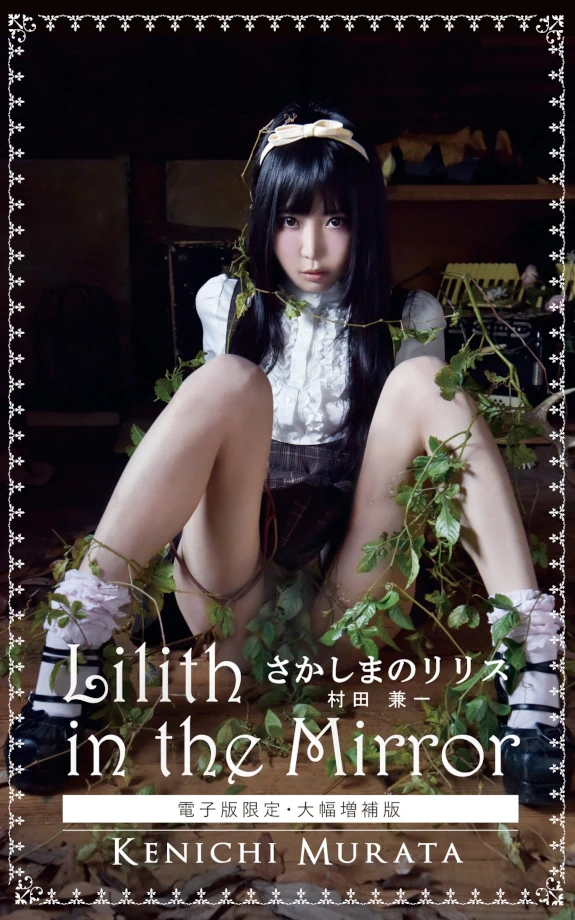
Nemuri-hime: Another Tale of Princess (“Sleeping Beauty: Another Princess Tale,” 2016) updated his website with this series, emphasizing lucid dreams as a creative source. Included in anthologies such as The New Erotic Photography (Taschen, 2006), his work gained artistic legitimacy. Exhibitions such as Majo no Keifu (“Genealogy of the Witch,” Genkosha, 2016) in Kyoto explored dark female lineages, with Yamasaki coloring botanical elements that invade the body and symbolize fusion with death.
Personal crisis and late evolution (2020–2025)
The pandemic and his health problems marked a turning point. Megami no Sumika (“The Goddess’s Abode,” 2020, Shoyuen Shosha) and Shojo Kannon (“The Girl as Goddess Kannon,” Atelier Third, 2017, but exhibited in 2021) fused eroticism with Buddhism: compassionate goddesses in bondage poses that evoke ecstasy and suffering.
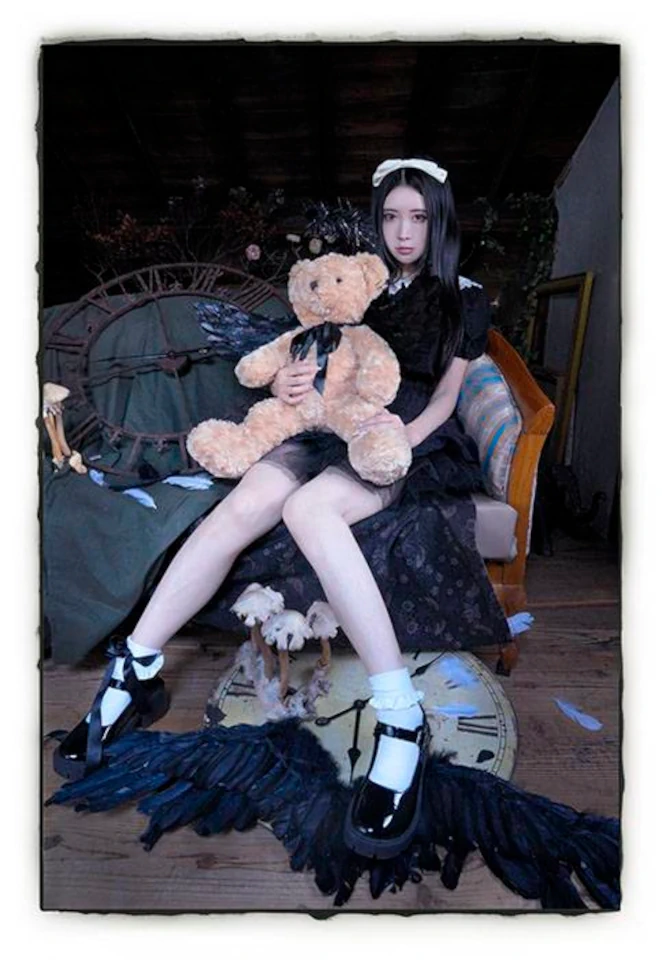
Tenshi-shu (“Collection of Angels,” Atelier Third, 2018) introduced broken wings and withered roses, anticipating his final phase.
In 2022, Himegimi to Shinzo no Megami-sama (“Princesses and the Goddess of the Heart,” exhibition at Kanda Koro, Tokyo) addressed physical vulnerability.
The climax came in September 2025: a surgical procedure triggered a hallucination—“And then everything went dark”—that inspired Ribbon & Bondage (Atelier Third, December 2025).
Here, bondage no longer stands against death but becomes an embrace. The exhibition of the same name (December 5–21, 2025, Tokyo)—with poetic verses about black roses and crimson fragrances—is his testament: a universe where “stillness and seduction, light and shadow, life and death intertwine in silence.”
Main publications
Murata has published more than fifteen books, many bilingual and in limited editions, with Atelier Third as a recurring publisher since 2015. Edition Reuss (Germany) published the princess trilogy: Japanese Princess (Hime no Nihon, 2005; his first export, 120 pages focused on the lolita aesthetic), Princess of Desire (Yokubo no Hime, 2007; inspired by fairy tales, including The Frog Prince) and Naked Princess (Hadaka no Hime, 2010; the close of the trilogy, in a limited edition with signed prints). TH Art Series published Pandora no Kagi (2013; with Nanano, exploring mythical genitality), Sakashima no Lilith (2015; 96 pages, bondage and biblical figures) and Nemuri-hime: Another Tale of Princess (2016; lucid dreams and eroticism). Genkosha published Majo no Keifu (2016), an anthology of witches with a traveling exhibition; Atelier Third, Shojo Kannon (2017; an erotic-spiritual fusion, 80 colored photos), Tenshi-shu (2018; broken wings and an introduction on “personal religion”) and Ribbon & Bondage (2025; his last work, with a hallucinatory epilogue and 80–90 desaturated black-and-white photos); and Shoyuen Shosha, Megami no Sumika (2020; 96 pages, on liberation from the “shell of childhood”). He also took part in anthologies such as New Nude Photography (nEgoist, 2009).
A legacy of fragility and resistance
Murata’s work is a visual diary of the human condition: from the furious denial of death in his “violent princesses” to the poetic surrender of Ribbon & Bondage.
His process—collaborative, dreamlike, therapeutic—has not only influenced contemporary Japanese eroticism (inspiring artists such as Yamashita Eiji), but also invites deep reflection on desire as a bridge to the ineffable.
In his final years, with death “as familiar as a close relative,” Murata does not create to save himself, but to transcend: his images, tinged with crimson red and abyssal black, remind us that the most elusive beauty is born on the threshold of nothingness.
In a world saturated with fleeting images, his universe endures as a private garden of light, where black roses bloom and sigh forever.
 EN