Shibari Methodology – Technical and conceptual principles
Learning shibari is not about imitating what someone else does, but about understanding what you are doing, why you are doing it and what happens when it is done differently.
In this section we analyse the technical, conceptual and methodological principles that make it possible to adapt technique to each person and each specific situation within a safe and responsible shibari practice.
Latest

Random selection of articles
The cost of gray areas
Dismissing things quickly brings peace of mind; suspending judgment for a while produces knowledge.

Myths in shibari (3-5): pain and endurance
Shibari is not a torture technique, but a management tool. Used outside mutual consent, it becomes manipulation.
Ryu, style and school in shibari
Telling apart the concepts of style, school and ryu can be confusing. In this article we offer a summary to serve as an introductory guide.

How to practice shibari with discernment
Repeating a technical application over and over without understanding it neither brings new knowledge nor lets us move forward. In this article we offer guidelines for efficient, fruitful practice.
Is suspension practice safe?
Short, honest answer: no.
Suspension in shibari carries inherent risks. The body is subjected to intense, unusual forces and loads while the ropes take part in managing that body. The combination involves risks of injury and accident.
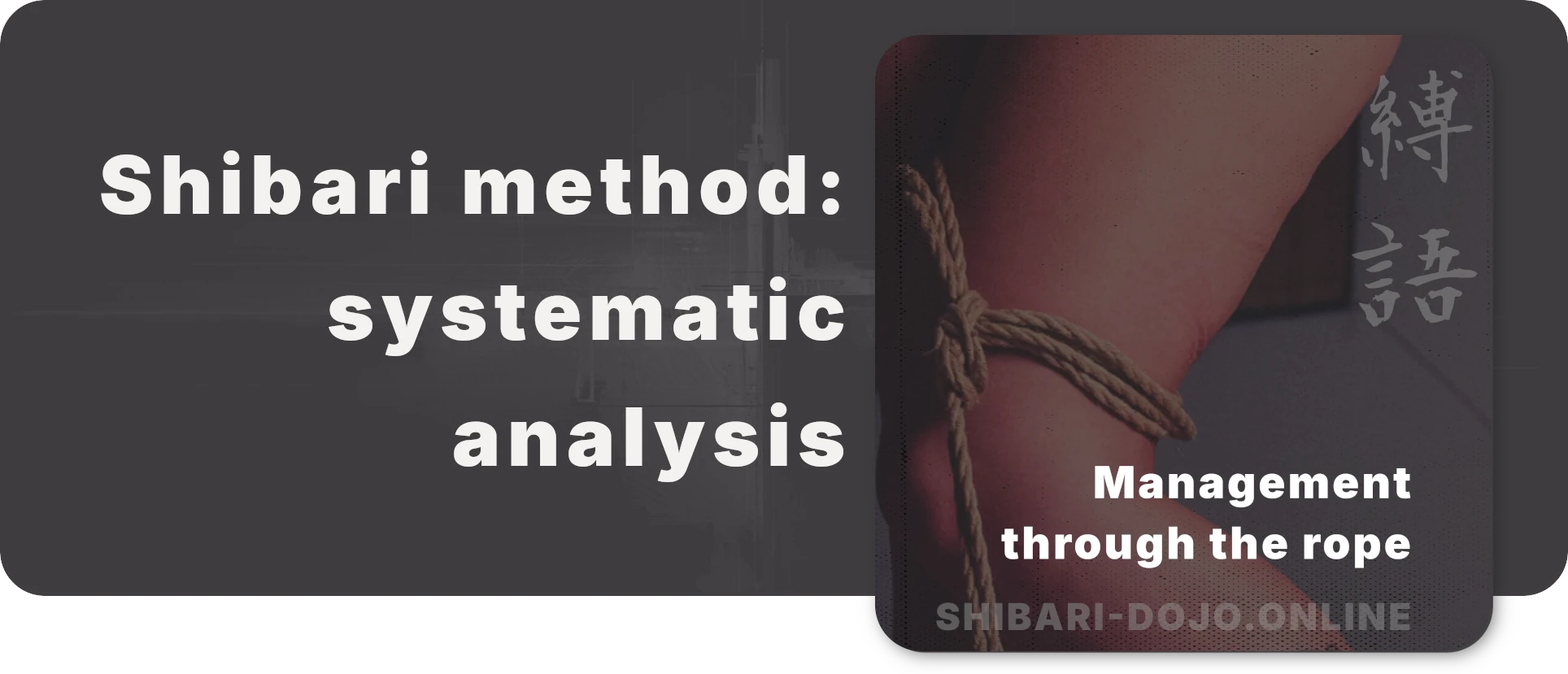
Nawasuji (繩筋): management through the rope
Unlike other shibari styles built around predefined figures or patterns, Sekibaku places the practical usefulness of the rope within the erotic interaction as its central technical criterion.
Semenawa (責め繩): what it is and what defines this style
Semenawa (責め繩) is one of the ways of understanding shibari that has gained the most presence in the West over recent decades.

Taijutsu (體術): body mechanics
The study of the techniques that allow us to understand and use the body during shibari is the second technical area of Sekibaku and, without doubt, the most demanding for students.
How the brain builds categories
Communities don’t think; people do, and they all share the same cognitive system.
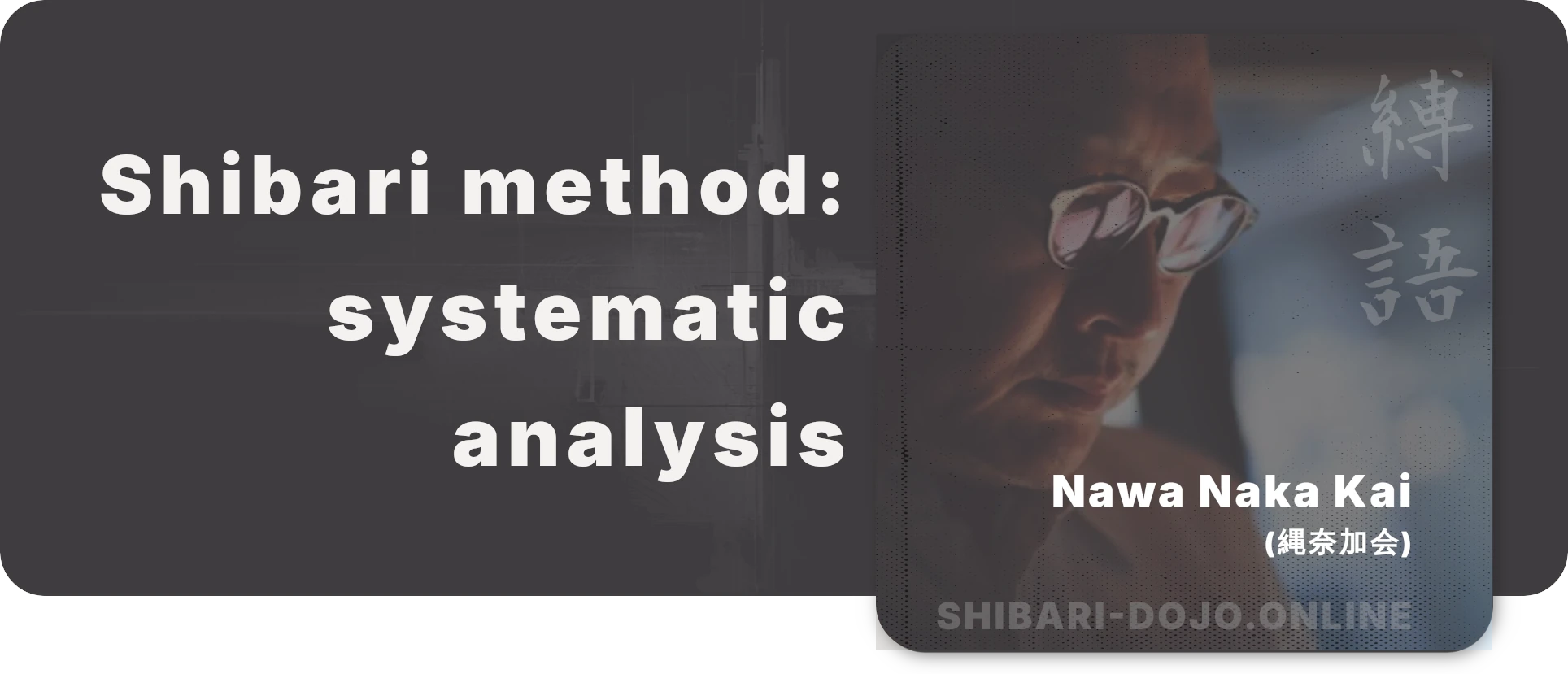
Nawa Naka Kai (縄奈加会)
If there is one name closely associated with semenawa, it is Naka Akira. Through his work and, especially, through training his students, he has played a decisive role in defining and spreading this way of understanding shibari.
From the individual to the community
An individual category helps us interpret the world. A shared category also helps identify who belongs to the group and who doesn’t.
A shift in attention does have consequences
There is an even deeper consequence: when the narrative changes, it is not only what we think we know about the past that changes; what we pay attention to changes too.
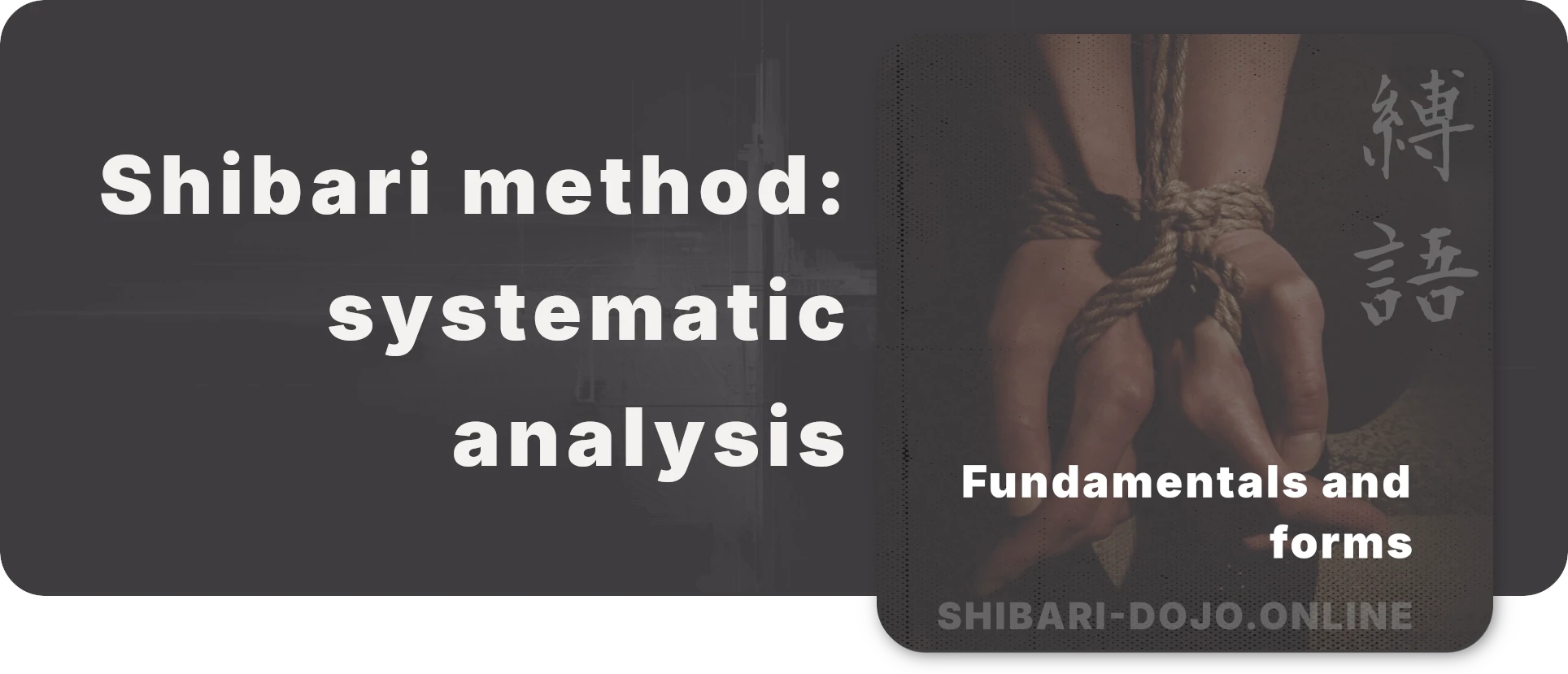
Technical fundamentals (基本) and basic forms (型)
In our dojo we don’t rely on canonical “figures” to teach shibari; instead we start from the technical fundamentals and their combined application to create a personal, unique and unrepeatable shibari.

How to learn shibari
Shibari is a technique and, as such, anyone can learn it by putting in time and effort.

Myths in shibari (1-5): is shibari an art?
Shibari is riddled with myths, that is, with mistaken ideas and falsehoods that, over time, come to be accepted without question.

Sekibaku (責縛) — Characteristics of the style
Sekibaku is the shibari style created by Yagami Ren and developed independently at Shibari Dojo.

Can you talk through rope? Effective communication in shibari
References to “communication” in shibari are generally full of vagueness, fantasies, inaccuracies or even nonsense. Fallacies such as “another level of communication,” “talking with or through the ropes” or “non-verbal communication” are nothing more than masks for avoiding reality.
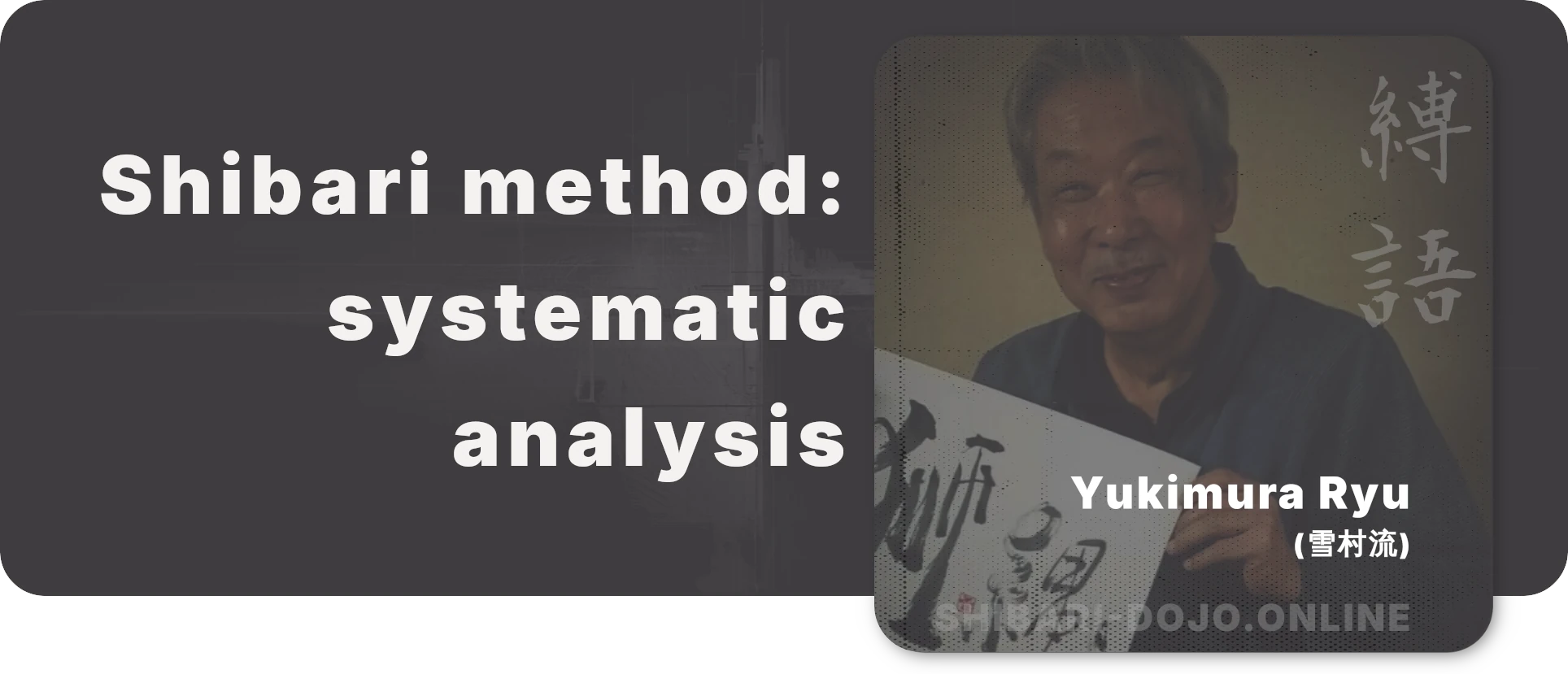
Yukimura’s approach to shibari (雪村流)
The shibari style developed by Yukimura Haruki (雪村春樹) represents a particular way of understanding kinbaku in which rope stops being merely a tool of restraint and becomes a vehicle for non-verbal dialogue.
When a rope becomes more than a rope
At what point does a depiction of a historical execution become an illustration of a contemporary erotic practice?
Akechi Ryu - Kanna lineage (神凪流)
Created by Nawashi Akechi Kanna (縄師明智神凪), the Kanna Ryu (神凪流) is a kinbaku style built around a very specific idea of transmission: technique can be taught, but understanding the rope, how one relates to it and the responsibility of passing it on are part of a broader learning process.

Myths in shibari (2-5): the confusion of terms
In the West, we face Japanese terminology that has already been reinterpreted along the way and that often reaches us distorted and secondhand.

Myths in shibari (5-5): origin and evolution
Is shibari really Japanese? Its origin undoubtedly places it in Japan, but today there are more practitioners, communities and schools outside the islands than inside them.
Kyosho-gaku – The education of desire
The literal translation of Kyosho-gaku (急所學) is “the study of vital points”: a martial arts concept referring to areas of the body where it is advantageous to apply a particular technique in combat.

Shibari: art or technique?
A clay bowl, made by a craftsman in his workshop, is bought at the market for a few euros and used at home to eat soup.
 ES
 EN