
Aoi Marie (葵マリー) is one of the historic names of Japanese SM. Since the eighties, the title has been passed down hereditarily and has become a “brand” in the world of adult entertainment.
Let us take a closer look at this system of generations and at the figure of the different Aoi Maries.
Generations
The concept of “generations” (shodai (初代), first generation; nidaime (二代目), second; sandaime (三代目), third) refers to a line of succession within the world of Japanese SM, similar to the way titles are passed down in kabuki, sumo or the yakuza.
It is not the same as one person using multiple aliases over a career: these are different individuals who inherit the stage name, carry on the original’s legacy and promote the SM genre in shows, erotic films and clubs.
In Aoi Marie’s case, the first generation started it all in the seventies and eighties, and her successors adopted the name to capitalize on her fame, with varying degrees of success and longevity.
This came about because the original Aoi Marie wanted to perpetuate her influence after retiring.
The succession was neither linear nor free of confusion: there were failed plans, the second generation was short-lived—some sources even doubt it existed—and the fourth was planned but never materialized.
Why generations? It is a marketing strategy in Japanese SM to create continuity and anticipation. The third generation describes it as an inherited title meant to attract followers and media.
First generation: Shodai Aoi Marie (初代葵マリー)
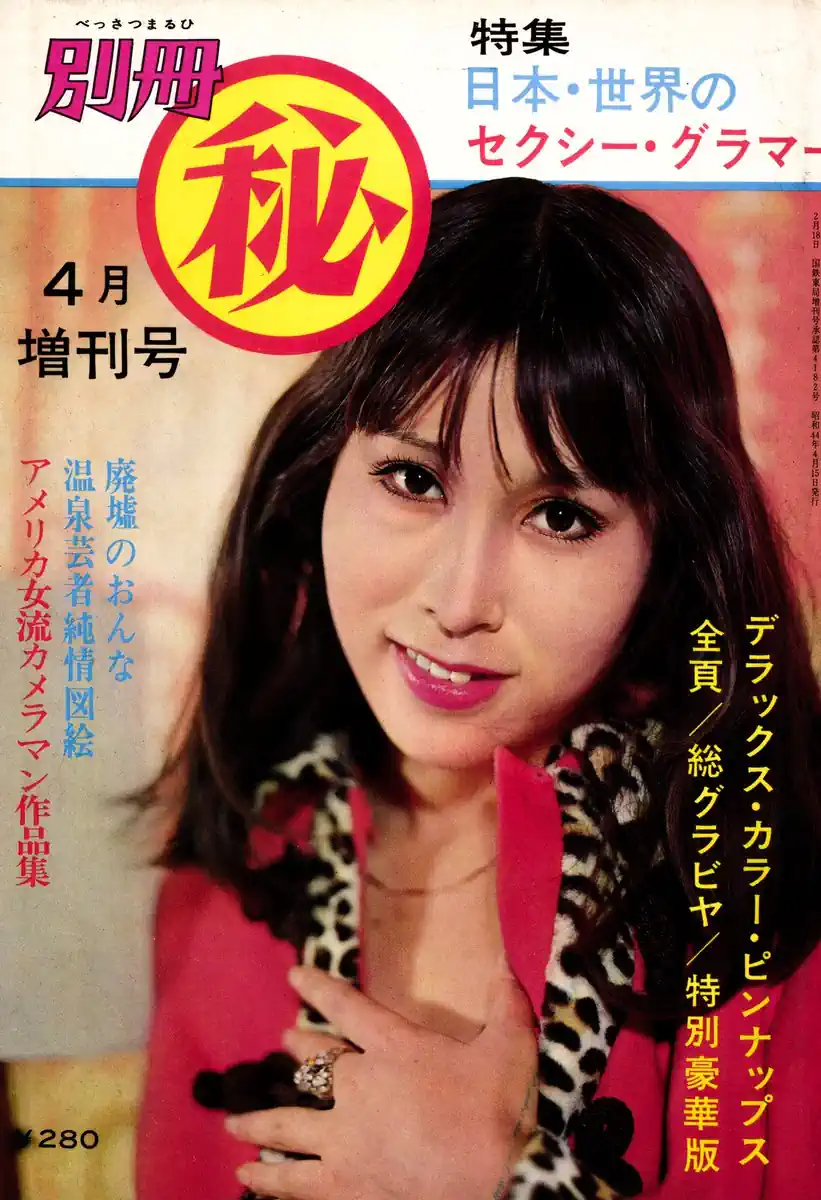
Her real name was Ito Naoko (伊藤尚子), and she was also known as Mary Aoi, Ito Kaka (伊藤花果) and Kosano Mariko (小佐野真理子). She was born on August 4, 1944 (year 19 of the Showa era) in Shizuoka (静岡).
The original Aoi Marie was a pioneer in the world of sadomasochism in Japan in the 1970s and 1980s and became the “SM Queen”: club promoter, director and erotic film actress.
She is regarded as the founder of modern SM within the Japanese adult industry, having established the genre in popular culture through live shows and film and video productions. Her legacy includes popularizing shibari and dominance-submission practices.
Details of her childhood and youth are scarce, but she is known to have begun her career in the sex industry in the seventies.
In 1974 she became manager of an erotic bathhouse in Ogoto (雄琴), a common step for women in the adult entertainment sector at the time. Soon afterward she was recruited by a hostess bar in Akasaka, Tokyo, where she took the stage name Aoi Marie.
She entered the SM world in 1974, inspired by Tani Naomi, the “SM Queen.” She quickly rose as a dominatrix, combining her role as a hostess with private SM sessions.
In 1980 (year 55 of the Showa era) she founded the SM club Akasaka Blue Chateau in Akasaka 2-chome, Tokyo, an innovative space that became her domain.
The club held weekly SM shows with guests such as the performer Osada Eikichi, and it welcomed future stars such as Matsukawa Nami (under the alias “Emi”).
The Blue Chateau pioneered drawing a mixed audience to public shows of bondage and erotic torment, and it established SM as an accessible form of entertainment.
Aoi Marie went beyond the club scene and ventured into erotic film. Tradition credits her with a connection to the Nikkatsu studios, leaders of roman porno (ロマンポルノ), although her documented filmography does not include it.
She appeared in and directed several eighties productions now considered classics: Sekkan 2: Kairaku-hen (折檻2 快楽編, The Punishment 2: Pleasure Edition, 1985), which she directed herself and which explores ecstasy through corporal punishment; Sekkan 3 (折檻3, The Punishment 3, 1985), a sequel that delves deeper into extreme bondage; and Gyakutai: Nyotai ikedori-hen (虐待 女体いけどり篇, The Abuse: Female Body Hunting Edition, 1987), in which she supervised scenes of erotic hunting and submission.
Other appearances include SM jotei Aoi Marie intai kinen sakuhin: Aigyaku no yakata (SM女帝・葵マリー引退記念作品 愛虐の館, SM Empress Aoi Marie Retirement Memorial: House of Love and Abuse, 1987), her farewell film.
In 1983 she published SM dokyumento: Aoi Marie no kokuhaku shuki (SMドキュメント葵マリーの告白手記, SM Document: Aoi Marie’s Confession Diary), an autobiographical account of her experiences that popularized SM in erotic literature.
Aoi Marie was famous for her charisma and commanding presence; she often wore haute couture in her shows, which, together with her image as a “voluptuous queen” (measurements: 98-58-88 cm), made her an icon for male audiences.
On August 28, 1987 (year 62 of the Showa era) she celebrated her retirement, accompanied by that film.
On January 30, 1988 (year 63 of the Showa era), months after her retirement, she was arrested by the Tokyo police on charges of “public indecency” (kozen waisetsu-zai, 公然わいせつ罪) for staging explicit sexual acts in her clubs. This scandal marked the decline of her SM empire.
For context, the charges were for public indecency, covered by Article 174 of the Japanese Penal Code. This offense applies to explicit sexual acts performed in public or in the presence of others, without consent or in settings that offend public morals. It did not involve violence or minors, but consensual SM acts on display.
Details: the Tokyo Metropolitan Police burst in during a live show where “obscene acts” (waisetsu na koi, わいせつな行為) were being performed in front of paying customers. The officers witnessed SM scenes with nudity, bondage and simulated or real practices, deemed “indecent” in public. The arrest was made in the act (genkohan, 現行犯).
In 1980s Japan, SM was a legal gray area: while erotic film (roman porno) was relatively tolerated, live shows were vulnerable to police raids on the pretext of protecting public morals. It was not an isolated case; the decade saw similar operations against other SM clubs. These arrests are often read as part of the never-explicit balancing act between the police and the yakuza, who control much of Japanese nightlife.
In 1989 she opened the club Aoi (葵) in Roppongi, and presumably expanded her businesses with Studio Chanel and the club Slave Contract, both focused on SM and themed parties.
The succession was chaotic: at her 1987 retirement ceremony she handed the title to the second generation, Hojo Sayoko (北条小夜子), of the Blue Chateau, but the third generation, AV actress Mizuki Haruna, took on the title in 1995 after a chance meeting at a club in Shibuya.
Aoi Marie died on a date that has not been publicly confirmed (possibly in the 2000s), but her impact on Japanese SM is undeniable. A pioneer in popularizing the genre, she inspired generations of dominatrixes and the “new SM” of the eighties.
Her works are still available in DVD reissues and on retro platforms, and she is remembered as the “SM Empress” who turned fetishism into performance art.
Second generation: Nidaime Aoi Marie (二代目葵マリー)
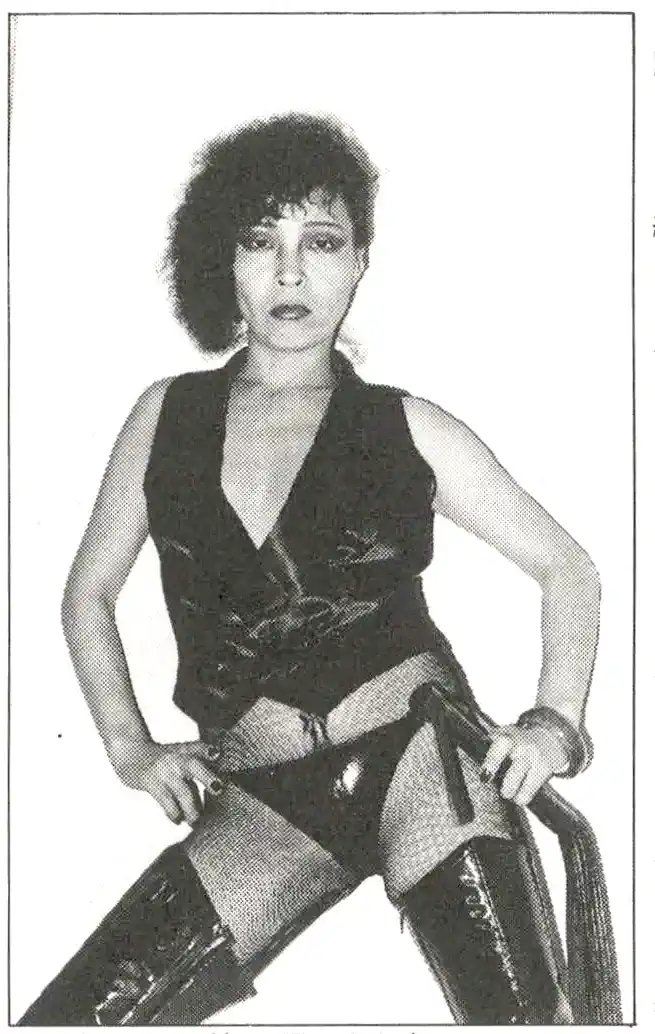
There is considerable confusion and little information about the second generation.
I know from experience that when this industry hides information, there is usually some agreement behind it that was never made public.
Hojo Sayoko, SM queen of the Blue Chateau in Akasaka, was proclaimed the second-generation Aoi Marie at the 1987 retirement ceremony.
This is supported by the words of the first-generation Aoi Marie in the video of the “Blue Chateau retirement show,” where she states that she “will hand the second-generation title to Hojo Sayoko,” and by the testimony of Mr. Watanabe, operator of the Nippon Akuma Club (Japan Demon Club) and a close friend of Hojo Sayoko at the time.
However, another person appears in SM magazines: Kurenai Ran, who performed as the second-generation Aoi Marie around 1989.
Most likely, after Hojo’s period, which lasted until 1988, the name ended up with Kurenai Ran, head of the new venue “Dorei Keiyakusho” (Slave Contract).
In any case, the second generation was short-lived. Its activity was brief, barely a couple of years, coinciding with the closure of the first generation’s clubs after police raids. According to the third generation’s accounts, the first quickly “dismissed” her for failing to meet expectations or because of internal problems.
She is known to have taken part in photo sessions and shows at venues such as the Alpha-In hotel (Akasaka, Tokyo), often working with figures such as Osada Eikichi.
She appeared in early AV (adult video) productions with SM and lesbian themes. Her style was intense and “merciless,” according to old fan reviews.
Toward the end of the eighties or the beginning of the nineties, the second generation gradually withdrew, although some sources claim she is still in the adult industry as a manager and producer. She has probably opted for a private life, something common in this industry, where figures seek anonymity after years of exposure.
Third generation: Sandaime Aoi Marie (三代目葵マリー)

The third generation, by contrast, is far more visible. Born in 1969 (year 44 of the Showa era) in Tokyo, she is a reference figure in Japanese SM.
She has established herself as a “grande dame” (ogosho, 大御所) of the genre, recognized for her role as an SM event promoter, columnist, AV actress and director, and as a pioneer of practices such as the “queen” role (dominatrix) and scatology (sukatoro, スカトロ, scat).
Unlike the previous generations, hers has been the longest and most visible career in the digital age, with more than 300 video productions and activism in defense of sex workers’ rights. She is considered one of the central figures of contemporary SM in adult entertainment, combining extreme eroticism with humor and social criticism.
The daughter of a hostess and a real estate businessman, she dropped out of high school in the eighties and worked briefly as an office clerk before entering the sex world. She soon became involved in fuzoku (風俗), offering herself as part of erotic services.
Fuzoku (風俗) refers to Japan’s commercial sexual and erotic entertainment industry. Its venues and services offer sexual or erotic experiences without full vaginal intercourse in order to stay within the law, since prostitution involving vaginal intercourse is banned under the 1956 Anti-Prostitution Law. It is a widely regulated sector that turns over billions of yen a year.
By 1991 she was already immersed in SM as a sado (dominatrix), exploring fetishes such as bondage, humiliation and scatology, which positioned her as one of the founders of these subgenres in Japanese AV.
As “Mizuki Haruna” or “Chiharu Mizuki,” she performed in videos for erotic fantasy clubs (imekura, イメクラ) and AV, centered on lesbian themes, toys, squirting and the training of submissives. Her approachable, charismatic style set her apart from the more classic SM queens, attracting a young and diverse audience.
The turning point came in 1995, during a chance meeting at a club in Shibuya with the first-generation Aoi Marie (Ito Naoko). That same day, the original passed her the title of “third generation” to promote her SM club Slave Contract (Dorei Keiyakusho, 奴隷契約書).
The naming ceremony was held on December 7, 1995 in Tokyo, attended by the first generation, formally bypassing the short-lived second.
This succession was a marketing coup: she began using the name, expanded the legacy and directed productions that mixed SM with taboo elements.
A gesture in keeping with the extreme aesthetics of the SM shows of those years is attributed to the succession ceremony: she cut her hand on stage and marked the model with her blood.
As a director and actress, she produced more than 300 titles between 1995 and the 2010s, many under labels such as Alpha International. They include Sandaime Aoi Marie: Ogon teihatsu (三代目葵マリー 黄金剃髪, Golden Shaving, 1995), which explores the fetish of erotic hair removal; Sandaime Aoi Marie no nyuhafu kyosei onani (三代目葵マリーのニューハーフ強制オナニー, Forced Masturbation with New-Halfs, vols. 1–5, 1996–1997), a controversial series with trans themes and simulated coercion; Unchi pati: Sandaime Aoi Marie & Tokui Yui (うんちパーティー 三代目葵マリー&徳井唯, Scat Party with Tokui Yui, 2000), a classic of group scatology; and Hakkeyoi nokotta (はっけよいのこった, 1997), a mix of traditional SM and folk humor.
Since 2000 she has been linked to the Tokyo shibari scene as a model, actress and producer. She is possibly one of the main drivers of the presence of scat in a good number of shibari productions in recent years.
Her business vision allowed her to capture Western interest after the success of the 2010 London festival, promoting annual tours by riggers and boosting the “Japanese scene” with nationwide events such as “Manifes 2016” (マニフェス2016) and the “All-Japan Shibari Exhibition” (Zen Nihon Kinbaku Hakurankai, 全日本緊縛博覧会), held from 2017 to 2024.
Like her predecessors, she was affected by Japan’s legal crackdown on the adult industry, which, far from stopping her, established her as a critical voice against “public morals.”
In 2018 she co-founded the Free Actress Alliance (Furi Joyu Renmei, フリー女優連盟) with Kasai Ami, a support network for independent AV actresses that works without relying on agencies.
She is president of the Japan Low-Leg Rise Association (Nihon Roregu Raizu Kyokai, 日本ローレグ・ライズ協会), an organization that promotes tolerance for the display of underwear, something unusual.
“Japan Association for the Legalization and Promotion of Low-Leg”: it emerged to legalize and normalize the social display of low-rise fashion, censored in certain public or media settings in Japan. Over time it became a mix of fashion lobby, fan club and promotional project for several AV actresses who follow the style.
She signed the petition “AV New Law for Better Working Conditions” (2017), calling for protection against coercion in the industry, although once the law was passed she was highly critical of its text and enforcement.
In March 2024, together with other people from the sector, she visited the Japanese Diet (Kokkai, 国会) to present a reform of the “AV Law” (AV Shinpo, AV新法), shortly before the second anniversary of its entry into force (June 23, 2022).
As a columnist, she writes for magazines such as Manzoku (weekly updates on SM and fetishism) and takes part in podcasts and documentaries, such as Wave-Laden Documentary: SM Queen Third Generation Aoi Marie (2019, Shukan Jitsuwa), in which she describes her journey from “street girl” to icon.
She is still active, organizing events and mentoring new generations of SM actresses.
Her legacy: democratizing SM as performance art, with irreverence and humor, which makes her “the queen everyone knows, but no one forgets.”
Fourth generation: Yondaime Aoi Marie (四代目葵マリー), never materialized (misui, 未遂)
There were plans for a fourth generation, but police pressure and the tense atmosphere on the SM scene around 2000 led to the title never being taken up.
According to the third generation: “A girl called Chako, a mangaka with experience in fuzoku venues, was supposed to inherit the title… but in the end she ran away.”
Japanese writing
Aoi (葵) is a common Japanese name meaning “mallow” or “hollyhock.” Marie (マリー) is the katakana spelling of the name “Marie,” adapted to Japanese pronunciation.
The succession is written Nidaime Aoi Marie (二代目葵マリー), Sandaime Aoi Marie (三代目葵マリー) and Yondaime Aoi Marie (四代目葵マリー), the last one planned but never materialized.
 EN