

Some careers look contradictory from the outside. That of Tohjiro—the professional name of Ito Chisho (伊藤智生), also credited as Ito Yuichi (伊藤裕一) in some early works—is one of them.
An independent film director recognized at international festivals in the mid-eighties, he spent the next thirty-five years producing adult video (AV) in Japan, where he built his own label, Dogma (ドグマ), specializing in shibari and extreme fetish.
In 2023, one of his productions was selected for the Oldenburg International Film Festival in Germany. In 2026, diagnosed with stage IV lung cancer, he shot StageⅣ. He died on July 17 of that year (year 8 of the Reiwa era), at the age of 70.
Seen from the inside, that career follows a precise logic. This article tries to reconstruct it.
Origins and training
Tohjiro was born on June 17, 1956 (year 31 of the Showa era) in Roppongi (六本木), a neighborhood in Tokyo’s Minato ward (港区). As a child he discovered cinema through Chaplin—The Kid, Limelight—and made an early decision: to devote his life to film.
After finishing secondary school, he found work as an intern in the art department of Mirrorman (ミラーマン), a series by Tsuburaya Pro (円谷プロ). He later joined the first class of the Yokohama Vocational School of Broadcast and Film (横浜放送映画専門学院, now the Japan Institute of the Moving Image, 日本映画大学).
While he was still a student, the director Morisaki Azuma (森﨑東) brought him onto Kuroki Taro no Ai to Boken (黒木太郎の愛と冒険) as an actor and script collaborator. The character he played was a young aspiring film director. It was no accident.
In 1979, together with the film and video producer Sadamatsu Mayako (貞末麻哉子), he opened the Creative Space OM (クリエイティブ・スペースOM) theater in Roppongi. The space hosted 8 mm and 16 mm screenings, stage performances and collaborations with directors such as Ishii Sogo (石井聰亙) and Yamamoto Masashi (山本政志).
At the same time, he worked as an assistant director on productions by the theater company Mumyojuku (無名塾), founded by the actor Nakadai Tatsuya (仲代達矢). These were years of broad training, without a single discipline.
Gondola: where it all began
In 1984 (year 59 of the Showa era), Tohjiro began producing his first feature film. He took on fifty million yen in debt. The film was called Gondola (ゴンドラ).
The project did not start from an abstract idea. One evening, a girl of about twelve turned up at the night painting classes a friend of his taught at Creative Space OM. She had left school in the second grade, at a time when dropping out was still very rare in Japan. She sat alone among the adult women.
Tohjiro remembered that what struck him most was her density: a quiet darkness, like a black hole. The more he got to know her, the clearer it became that this girl needed something. He chose to make a film with her—and for her—as a way of opening up a space where she could exist differently.
Gondola tells the story of Ryo (良), a young man from the Shimokita Peninsula (下北半島) in northern Japan who works cleaning skyscraper windows, suspended in a gondola.
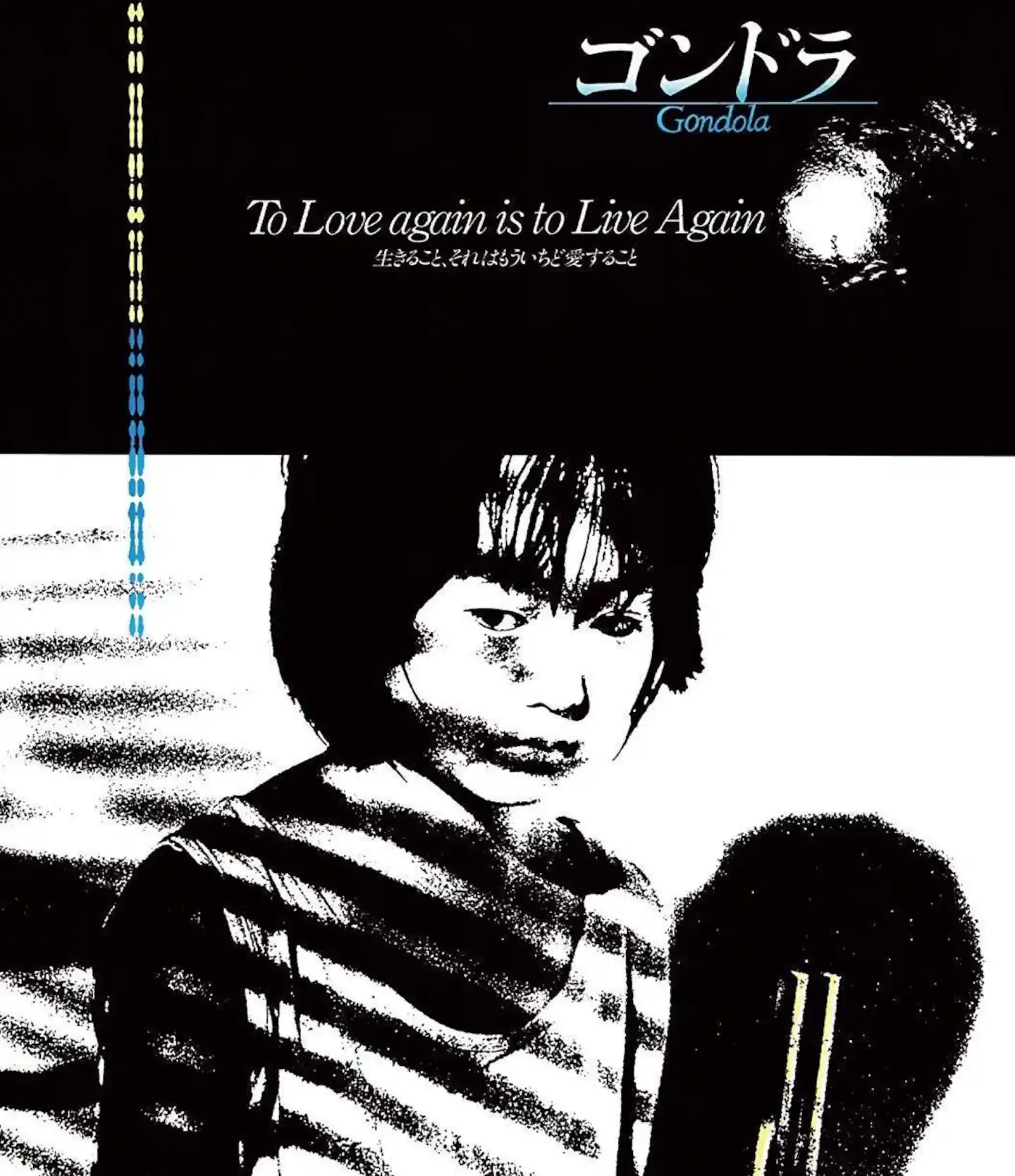
In a tall building lives Kagari (かがり), an eleven-year-old girl who looks after two white Java sparrows (buncho, 文鳥) and listens to the vibration of a tuning fork. When one of the birds falls ill, Ryo goes with her to the vet. The bird dies. Her mother throws the body away. Kagari runs off. Ryo takes her north.
The film was completed in 1986. It struggled to find a release in Japan, but it toured international festivals, where it was recognized.
Morisaki Azuma and the distributor Kawakita Kashiko (川喜多かしこ) backed it; the poet Tanikawa Shuntaro (谷川俊太郎) praised it publicly. In 1987 (year 62 of the Showa era) it was formally released at Theatre Shinjuku (テアトル新宿), and in 1988 it won the best new director award at the Yokohama Film Festival (横浜映画祭).
The debts, however, remained.
Gondola contains, in embryo, what Tohjiro would go on doing in the decades that followed: a sustained gaze on people living on the margins, without judgment and without sentimentality.
In 2014, at a screening of Kuroki Taro no ai to boken, Morisaki Azuma, by then ill, came in person to ask him: “Show me a second film before I die!”
In 2016, on learning that the original negative stored at Imagica (イマジカ) was deteriorating, and coinciding with his sixtieth birthday, he decided to produce a digitally remastered version.
In 2017 he took it to mini-theaters across the country. His bond with that first film was never fully broken.
The turn to AV, or consistency in disguise
In 1989, while preparing his second film, a producer demanded script changes that made his project unrecognizable. Tohjiro refused. With the Gondola debts still unpaid, he was introduced to V&R Planning (V&Rプランニング), an adult video label that offered him something rare in any industry: complete freedom to shoot whatever he wanted.
He made his debut as an AV director in January 1990 with Blue Film (ブルーフィルム), co-written with Tameike Goro (溜池ゴロー) and starring Saejima Nao (冴島奈緒).
What he found in that work was not only a financial way out: once again, he found people living outside the frame. Actresses who had come to the industry for complex reasons, who carried their own stories and did not easily fit anywhere else. It was, to some extent, the same human territory he had explored in Gondola.
During the nineties he directed for many labels—VIP, Cosmos Plan, Alice Japan, Max-A, Kuki, CineMagic—across a range of genres: cosplay, bondage and sadomasochism, among others. In 1996 he also directed a title in Nureki Chimuo’s Kinbiken video collection, Beautiful Blood and Juvenile Accumulative Sentence (Kinbiken Video P19).
In 1997 he joined Soft On Demand (ソフト・オン・デマンド / SOD), a label with greater freedom over content. There he launched his own line of videos under his name, within SOD’s Hamlet label, starting with Real Fetish (TJ-001), and promoted the career of Morishita Kurumi (森下くるみ), the actress he worked with most extensively over the years.
In December 1999, SOD’s founder, Takahashi Ganari (高橋ガナリ), imposed a one-year break from AV production with a direct instruction: to refocus his gaze. He assigned him soft-content V-Cinema (Vシネマ) work.
In that period he directed, among others, Lovely Woman Teacher (愛しの女教師), starring Asaoka Mirei (朝岡実嶺). That collaboration had a history, and it would have consequences.
Dogma, the production company
In February 2001 (year 13 of the Heisei era), Tohjiro founded Dogma (ドグマ) within the SOD group. A year later he made it an independent company, distributed through Outvision (アウトビジョン). Morishita Kurumi left SOD to join as a contract actress. Dogma had a clear identity from the start.
As of 2026, the company’s registered name is OM Production, Inc. (株式会社オムプロダクション), and its chief executive is Mikami Muneyuki (三上宗之). Its offices and studios are in Roppongi (六本木), Minato (港区), Tokyo—the same neighborhood where Tohjiro was born and where he opened his first theater. Digital distribution runs through its own website; DVDs, through Hokuto Corporation.
Regular output was around eight titles a month, roughly half of them directed by Tohjiro himself.
Dogma specializes in extreme fetish video: bondage, sadomasochism, forced fellatio, enemas and related genres. Within that broad framework, the label developed its own identity through series that ran for years and a production approach that put authenticity before artifice.
Among Tohjiro’s most representative series is Confinement Chair Trance (拘束椅子トランス), which began in November 2002 and became one of the label’s longest-running.
M-Drug (Mドラッグ), with a sadomasochistic theme, began in September 2005 with Hoshitsuki Mayura (星月まゆら) as its first lead and went on to exceed twenty installments.
Innocent Desire (青い性欲) began in March 2001, during the SOD period, and continued under the Shyness sub-label from 2007. The series Kinbaku M Female Actress Collection (縄・M女優 コレクション) documented, between 2006 and 2008, the work of different actresses within the world of kinbaku.
Dogma was also the setting in which Tohjiro developed collaborations with the most important bakushi (縛師) of his generation, including Naka Akira (奈加あきら), Yagami Ren (鵺神蓮), Doyama Tesshin (堂山鉄心) and Mira Kurumi (ミラ狂美). These collaborations led to productions that documented different kinbaku styles under demanding shooting conditions.
Beyond Tohjiro’s own series, Dogma hosted the work of other directors under its sub-labels. CORE SM (December 2005) was created for hardcore sadomasochistic production; Dogma Out (2005 to 2006) was used mainly by the director Baba the Babee. The sub-label structure made it possible to segment the catalog without losing brand coherence.
On the awards front, between 2005 and 2007 Dogma sponsored the D-1 Climax (D-1クライマックス), a competition also open to outside directors that combined sales over a set period with jury ratings. Tohjiro took first place in 2005 and 2006; in 2007 the prize went to Nimura Hitoshi.
In 2009, Dogma entered the AV Grand Prix for the first time with Tohjiro’s Vomit Enema Ecstasy X (ゲロ浣腸エクスタシー X). It did not win first prize—which went to S1 No. 1 Style—but it did win the digital sales award and its two-million-yen purse.
Among the actresses who worked regularly with Dogma were, besides Morishita Kurumi, Hoshitsuki Mayura (星月まゆら), Hasegawa Chihiro (長谷川ちひろ), Tomoda Maki (友田真希) and Izumi Marin (泉まりん).
These actresses make up the group informally known as “Tohjiro’s M Women.” The bond between Tohjiro and his collaborators was not merely professional in the conventional sense: he saw them as performers with a specific disposition toward the material, not simply as people carrying out a script.
Dogma is still active; its full catalog is larger than secondary sources record.
Shibari as a language
Tohjiro was a member of Kinbiken (緊美研), the society founded by Nureki Chimuo (濡木痴夢男), one of the historic figures of Japanese kinbaku, and he produced works starring Nureki.
One of the most representative productions of that period is Kinbaku Gonin (緊縛 GONIN 塩見彩): six hours long, on two DVDs, shot in 4K without cuts and without a script. The lead actress, Shiomi Aya (塩見彩), is tied in turn by five bakushi—Naka Akira, Himuro Eve (飛室イブ), Kazami Ranki, Doyama Tesshin and Yagami Ren—each with his own style and rope vocabulary.
The result is, to some extent, a comparative record of five ways of understanding and performing kinbaku.
Dogma was one of the few labels that kept shibari going as a genre with sustained production and technical judgment. What sets Tohjiro’s approach apart is not only the scale of his productions, but the absence of artifice: what you see on screen is real.
Shura (しゅら): a return to film through shibari
In 2023 (year 5 of the Reiwa era), Tohjiro presented Shura (しゅら-縄の姉妹‐, “Rope Sisters”), a production that does not fit easily into any category.
Formally it is a feature film with cinematic ambitions; in content, it works with shibari, family drama and incest as narrative material.
The kinbaku director was Yagami Ren (鵺神蓮). The leads, Shiomi Aya and Kanno Hana (神納花), play two sisters raised in a family where the father is a bakushi and the mother a kinbaku model. The film explores what that inheritance does to those who receive it.
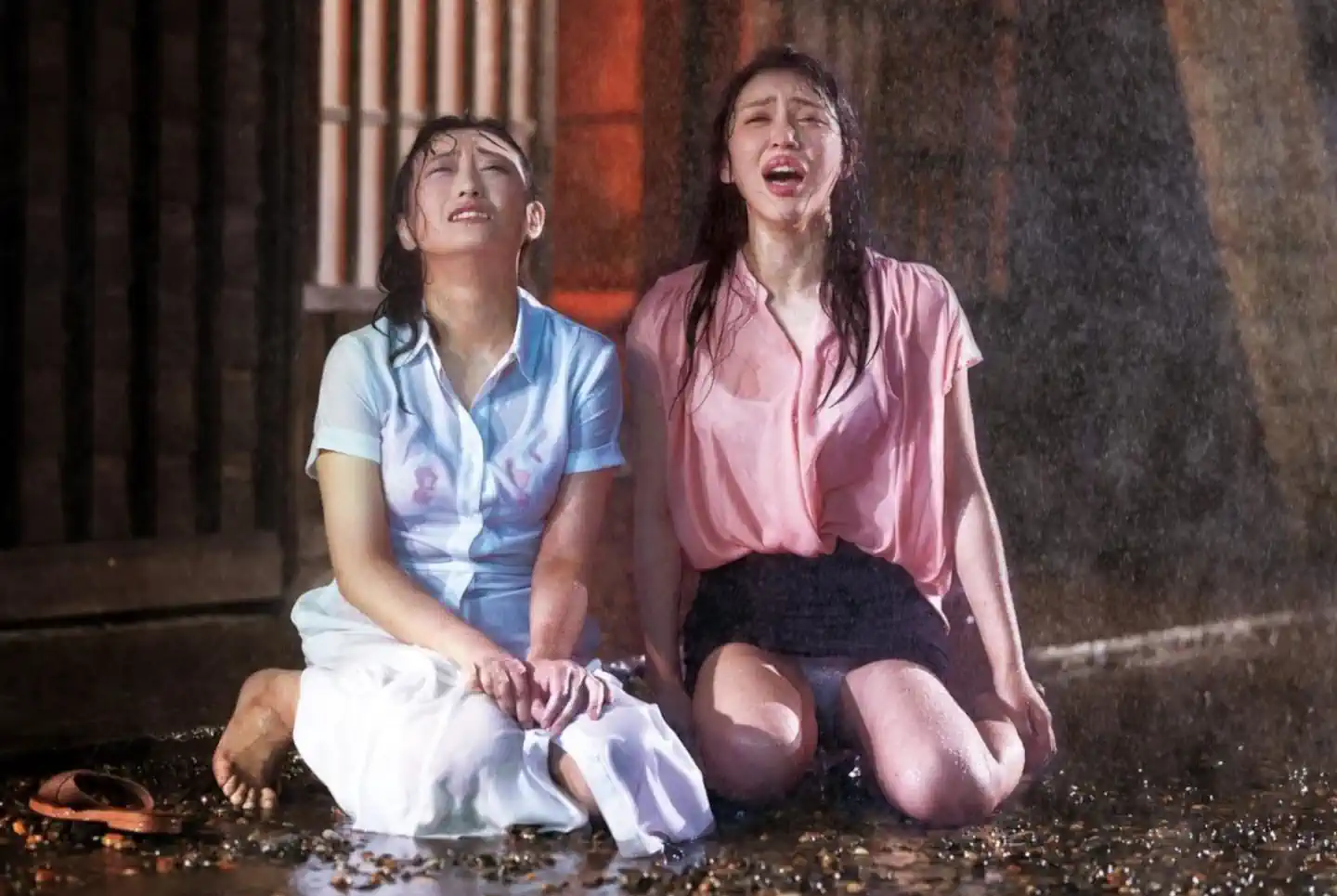
Editing took almost a month; the sound mix was done at Imagica (イマジカ). Final running time: 124 minutes.
Shura was selected for the Midnight Express section of the Oldenburg International Film Festival in Germany in October 2023. It was the first time in thirty-six years that a Tohjiro production had reached an international film festival. The circle with Gondola was closing, at least in part.
The release of Shura coincided with a period of legal change in the Japanese adult video industry. The new legislation affected production conditions and created uncertainty about the professional future of many people working in the sector.
After the new 2022 AV law, he signed as Tohjiro three feature films halfway between independent and erotic cinema: Itakute, kimochi ii koto (いたくて、きもちいいこと, 2022), Shura (2023) and Dokyusei (同級生, 2024).
Asaoka Mirei’s (朝岡実嶺) promise
In 1991, during the shoot of a work by Asaoka Mirei, Tohjiro was present at the casting. It was unusual for a director to attend that stage of production. She did not know who he was; she saw him watching her closely and did not know what to make of it.
He, on the other hand, sensed something immediately: an aura that did not belong to the context. He compared her to Hara Setsuko (原節子) and Yoshida Sarika (吉田さりか), two figures of Japanese cinema from different generations. It was not casual hyperbole. It was an assessment.
Later, Asaoka told him her story. By her own account, she had been tricked into the adult film world. What she wanted—what she had always wanted—was to be an actress. But that path had closed doors to her: mainstream film producers refused to work with her as soon as they learned of her past, and her parents could not look at her work with pride. As she told him, she cried.
Tohjiro made her a specific promise: “I’ll make you a film where you’re the lead, a film that opens doors for you internationally.”
Asaoka waited. Ten years went by, twenty, thirty. There was a time, around forty, when she stopped waiting; she thought it was not going to happen. She kept working as an actress in television and theater productions—among them the drama Koko Kyoshi (高校教師, TBS)—and studied acting at Ivana Chubbuck’s studio in Los Angeles for two years.
It later came out that they were married, although Tohjiro had not made it public until the preparation of StageⅣ.
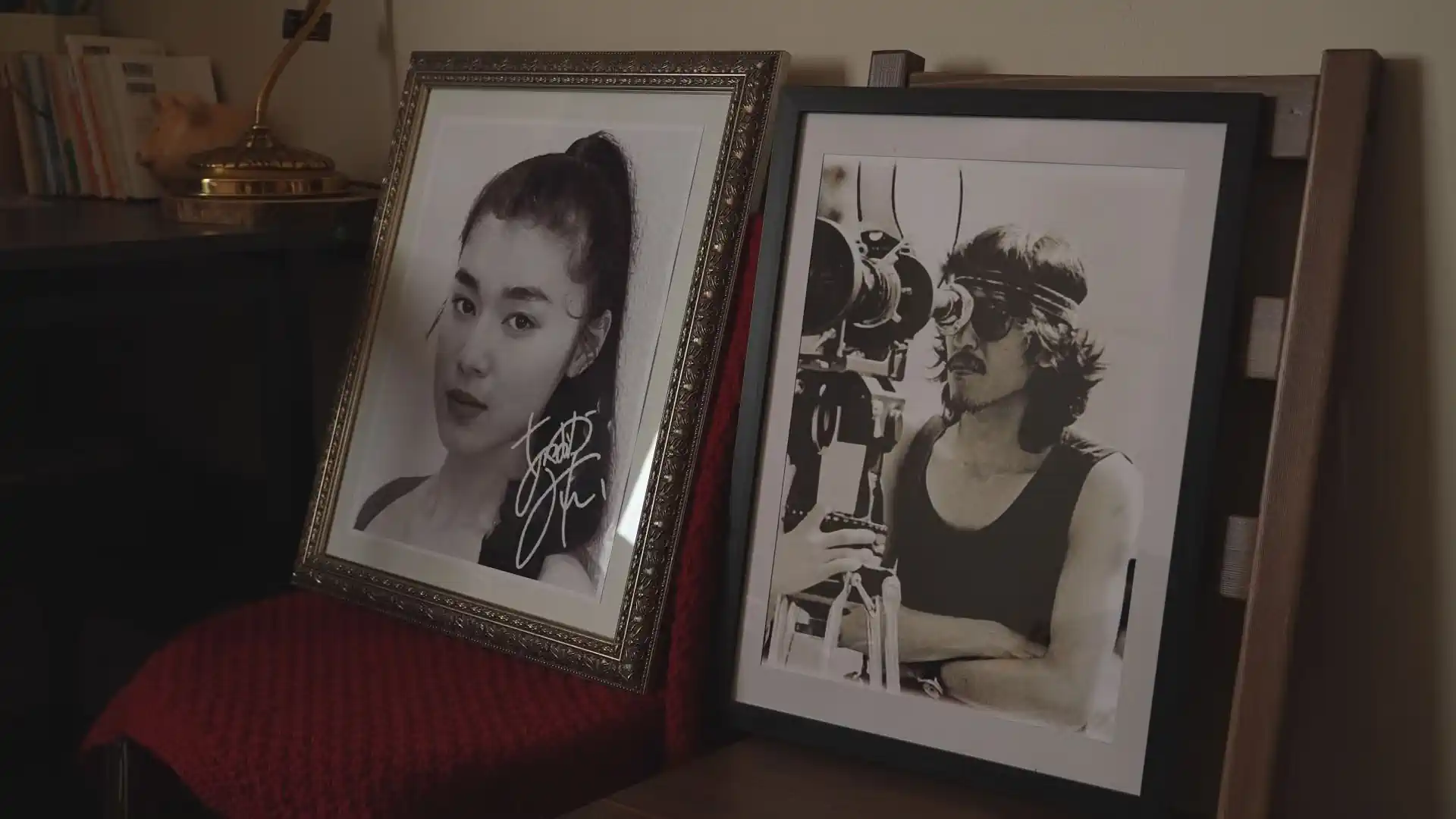
The promise did not go away. It was only waiting for the moment when Tohjiro would have no choice but to keep it.
StageⅣ: the film as an act
In March 2025, Tohjiro was diagnosed with stage IV lung cancer. The doctors told him that surgery was not possible and that the prognosis was limited.
Tohjiro remembered that his mind went blank as he left the consultation. Asaoka recalls that the nurses looked at her with pity when he came out, and that he walked straight past muttering “the worst,” without even stopping to pay at the counter.
While in hospital, he began to write: treatments, daily life, memories. He filled six notebooks. At some point he thought it could become a screenplay. It did.
The resulting film, StageⅣ, is a filmed autobiography.
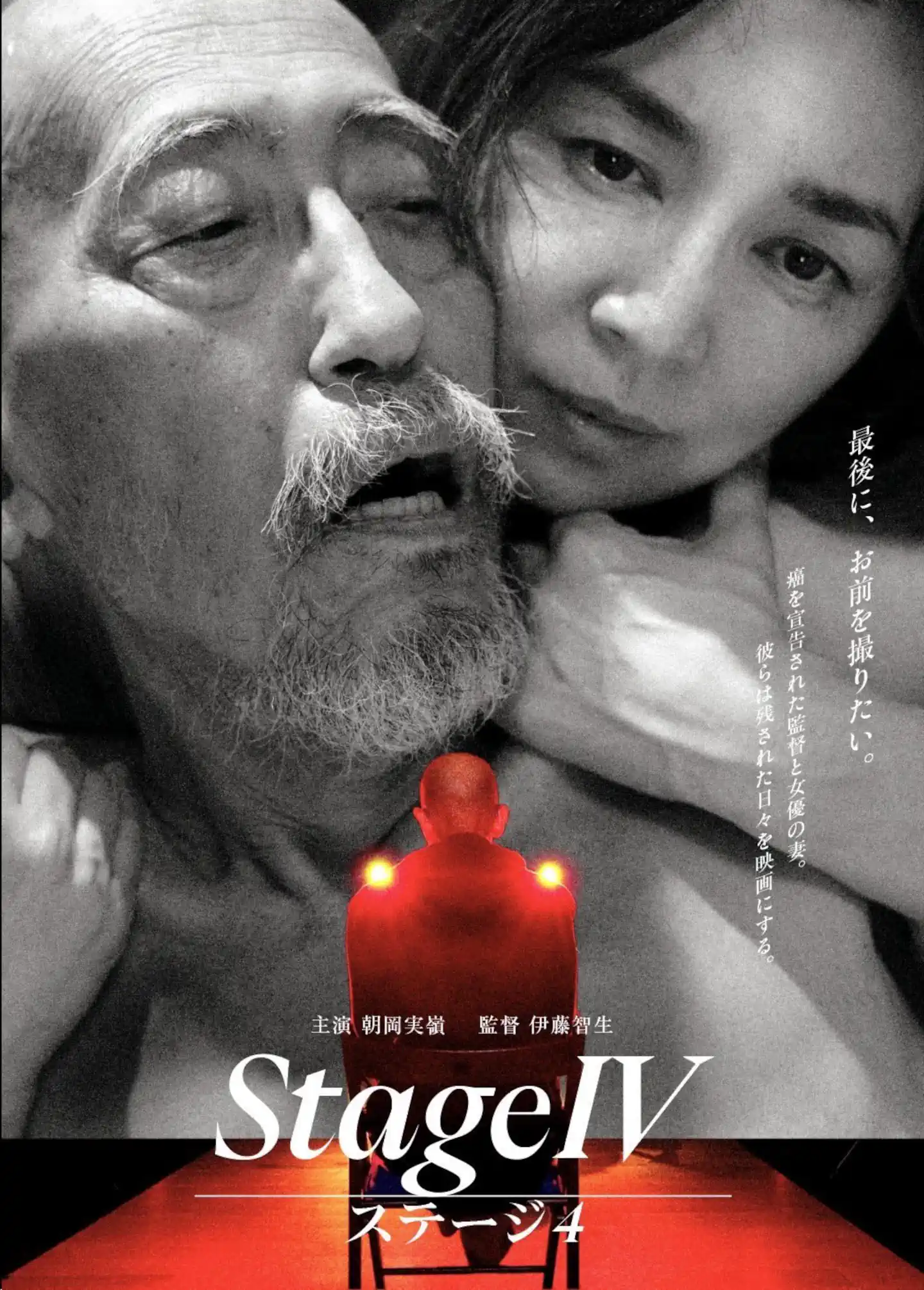
Tohjiro and Asaoka Mirei play themselves—or versions of themselves—under the fictional names Bonza and Yoshiko. The decision to make their marriage public for the first time was part of the project from the outset.
The central narrative thread is, paradoxically, food. Asaoka adopted a strict dietary therapy in response to the diagnosis: drastic salt reduction and the elimination of red meat and processed foods. Tohjiro had the opposite preferences in everything—beef, strong flavors, a very short list of foods he would tolerate. What followed was a sustained, everyday conflict: he called her a fanatic and said what she was doing was a religion. At one point she walked out of the house and cried on the subway.
The balance came unexpectedly. During a long hospital stay, Tohjiro found that the hospital food—with meat, with some salt, with familiar recipes—tasted delicious to him. The explanation was simple: the months of strict diet had recalibrated his sense of taste. Back home, the contrast was difficult again, but the negotiation had already begun. Asaoka gradually brought in quality ingredients without additives and adjusted the flavors. They reached common ground.
Shooting began in late April 2026, against medical advice. They wrapped in late May. The preview screening was held on June 26, 2026 at Theatre Shinjuku (テアトル新宿)—the same theater where Gondola had premiered almost forty years earlier. The production was partly funded through a crowdfunding campaign on CAMPFIRE that exceeded its goal of three million yen.
Tohjiro had said, without drama, that by September he would probably be gone. And yet he rehearsed, reviewed the edit and planned a stage play for the autumn in which Asaoka would also take part.
He died on July 17, 2026, at the age of 70. Asaoka Mirei announced his death on July 21; the funeral was held privately, as he had wished.
The film is not about death. He made that clear: he wanted it to be a record of her energy, of her ability to keep going where others would stop. For Tohjiro, the diagnosis was not only loss: it was also what made him feel the value of every person and every moment with a clarity he had not had before.
In the preview interview he summed it up like this: “Without the cancer I wouldn’t have thought so much about my life or valued people so much. In that sense, it’s not so bad.”
Legacy and reading
The question Tohjiro’s career raises is not a simple one. Is AV a form of cinema? Can shibari be a cinematic language? Where does the industry end and art begin?
These questions have no clean answers, and Tohjiro probably would not have looked for them in those terms.
What his work does show, consistently over forty years, is a way of looking at people: a gaze that does not judge the margin from the center, but settles in the margin and works from there. Gondola and StageⅣ are very different films, made in very different circumstances. But both come from the same gesture: someone who looks at another person closely, decides that person deserves a film, and makes it.
The promise took thirty-five years to keep. The diagnosis is what made it urgent. But the promise existed before the diagnosis, and that matters.
StageⅣ is not a film about cancer. It is a film about what one person is capable of doing for another.
 EN