

In May 2023, the medical journal Cureus published a paper on nerve injuries in shibari practice.
In this article we summarize it in more accessible language than the original publication, adding at the end some thoughts on anatomical safety in shibari practice.
Publication
Acute Radial Compressive Neuropathy: The Most Common Injury Induced by Japanese Rope Bondage
Vasily Khodulev, Artsiom Klimko, Nataliya Charnenka, Marina Zharko, Hanna Khoduleva DOI: 10.7759/cureus.39588
Open access, in English (link at the bottom of this post).
Summary
Abstract
The study focuses on injury to peripheral nerves, including the radial, axillary and femoral nerves, that is, on acute compressive neuropathy induced by shibari practice.
To investigate the nature and extent of nerve injuries associated with this practice, the authors carried out an exploratory (preliminary) study of a sample of 10 practitioners, reporting a total of 16 injuries identified in the radial, axillary or femoral nerves.
The injuries presented acutely, immediately after full-body suspensions.
The radial nerve was the structure most frequently affected, with 90% of individuals experiencing this type of injury.
The authors highlight one particular case of repeated acute compression of the nerve during full-body suspension practice. A 29-year-old woman suspended for 25 minutes developed “drop” (loss of strength?) in the hand and fingers, as well as loss of sensation in the left hand.
Tests revealed a 77.3% conduction block in the upper arm segment. Improvement was seen at 3 months and was complete at 5 months.
Seventeen months later, both radial nerves were compressed again during a similar 8- to 10-minute suspension. Improvement came after a week and was complete after four weeks.
The same person suffered a new episode of compression three years later. It lasted 5 minutes, and recovery was complete within 2 minutes.
Since the radial nerve is the structure most often injured, the study reports findings that underline the importance of knowing the anatomical course of the radial nerve, in particular its posterior position at the level of the distal deltoid tuberosity, as a means of preventing nerve injuries in this area.
That knowledge is crucial for shibari practitioners in order to take the necessary precautions and avoid possible neurological damage.
Methodology
To address the lack of knowledge about nerve injuries associated with shibari practice, the authors carried out a retrospective survey among a number of “experienced practitioners” (sic).
Participants were recruited through online forums and social platforms for shibari enthusiasts in the US, as well as through the participants’ own personal networks.
Through semi-structured interviews, the aim was to learn about their shibari experience, their knowledge of anatomy and nerve injuries, the types of tying techniques used and the precautions taken to prevent neurological damage.
Open-ended questions were asked to gather information on demographic characteristics, medical history, shibari experience, injury characteristics and recovery outcomes.
Ten individuals were identified who had suffered peripheral nerve injuries (16 injuries) with resulting motor impairment after suspension practices.
The semi-structured survey designed for the purpose combined open-ended questions with multiple-choice and Likert-scale questions.
The sample size was not predetermined, given the exploratory nature of the study and the scarcity of available data on the subject. The aim was to gather as much information as possible to gain a thorough understanding of the nerve injuries associated with shibari.
The survey collected subjective data on the nerves affected, the duration of the suspension, recovery time and whether medical attention was sought. The type of technique used, the position of the rope on the body and any factors that might have contributed to the injury were also recorded.
Injuries were classified by the type and location of the affected nerve, and the duration of nerve compression or traction was also recorded. The data were analyzed to identify common themes and patterns.
The study has several limitations, including the small sample size and possible selection bias resulting from the recruitment methods. Its retrospective nature also makes it susceptible to recall bias. Finally, since only people who had suffered injuries were included, the results may not provide a complete understanding of the associated risks.
Results
With one single exception, all nerve injuries occurred rapidly and acutely after full-body suspension.
The attached table shows the demographic and anthropometric data, as well as information on the nerves affected.
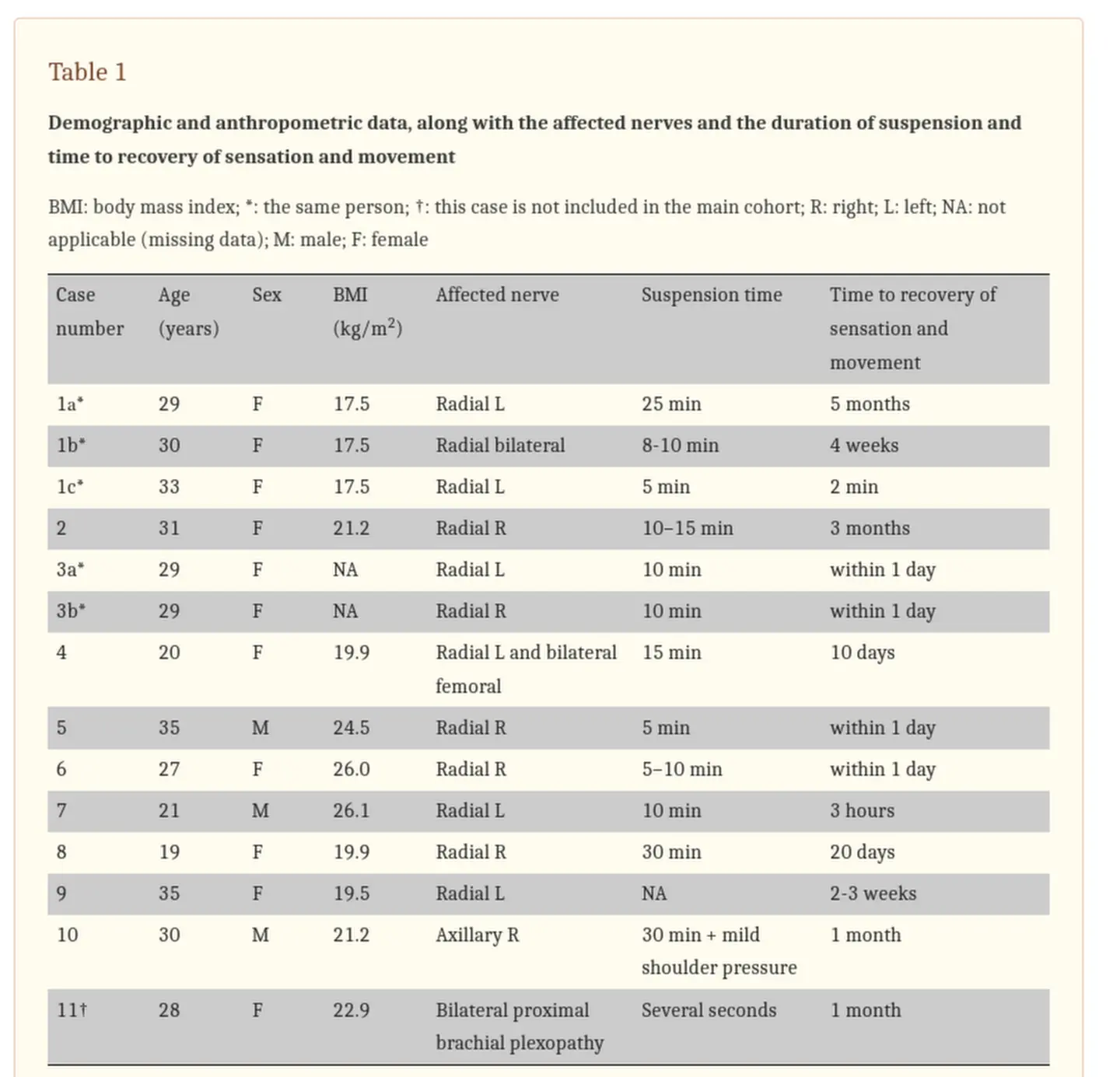
Among those affected who sought medical attention (5 cases), nerve conduction studies (NCS) were carried out in two.
The analysis showed that the radial nerve in the upper arm was the structure most frequently affected in the sample, with 90.0% of patients and 81.3% of injuries involving this nerve.
The rope was usually placed on the middle third of the upper arm to allow a horizontal or side suspension, with the body facing down or to the side, respectively. The hands were often tied in a box configuration.
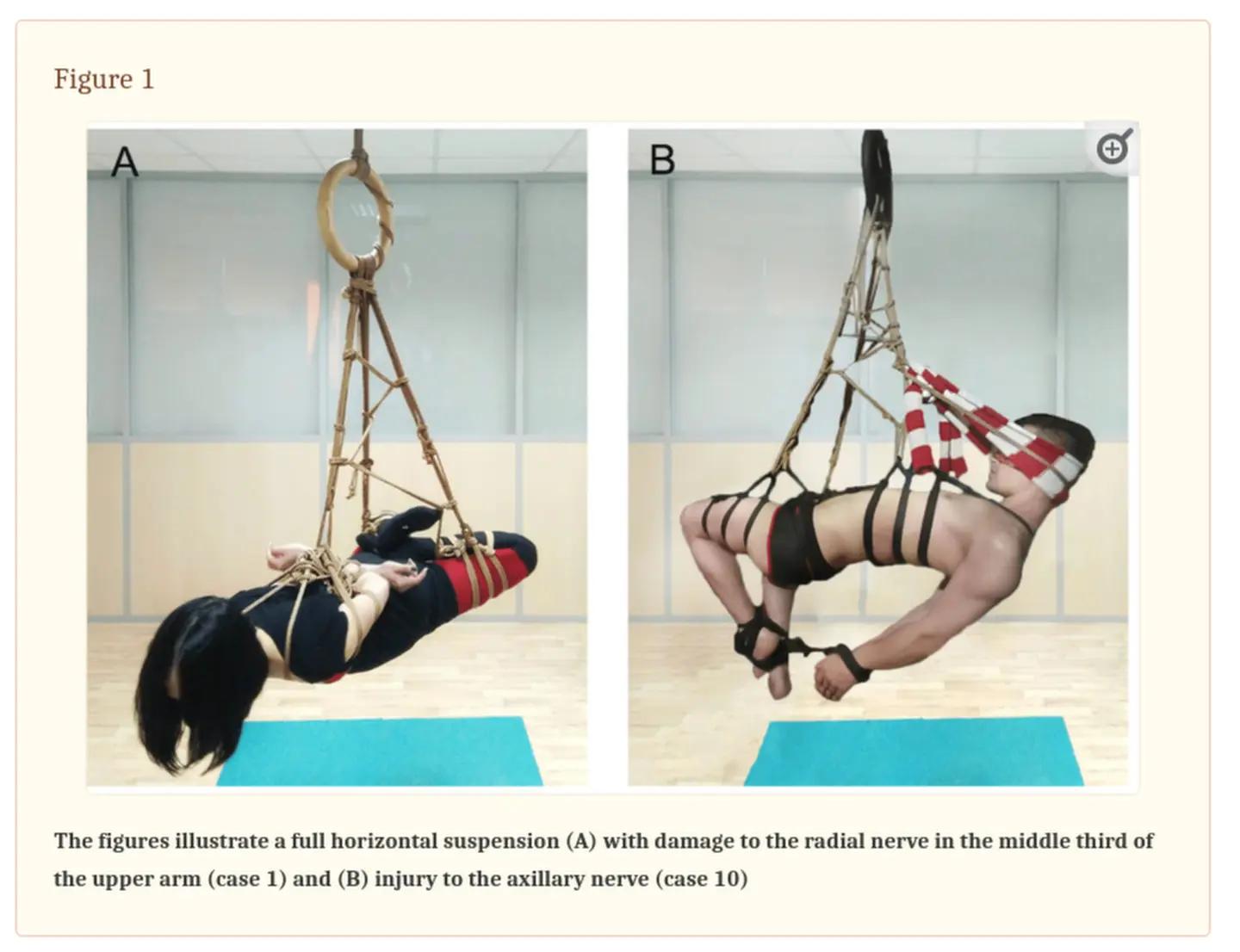
Note by Sr. Interior: having seen the photographs presented in the study, I want to point out the appalling, deficient technique used in the suspensions shown and how inevitable injury is when practices are carried out with the absence of knowledge and skill that both cases reveal.
Those affected typically described numbness on the dorsal surface of the wrist and varying degrees of weakness in the wrist and finger extensor muscles, from complete paralysis to moderate weakness. Sensory loss was also observed on the lateral back of the hand.
As a shibari instructor, I can only be amazed at the utter lack of judgment in the practices shown, which reveal a complete ignorance of the technique and a notable absence of skill and responsibility.
Discussion
Although the nature of the study does not allow speculation about the overall incidence of nerve injuries in the practicing community, the results show that the risk associated with this practice is not negligible.
The prevalence of injuries observed underlines the importance of recognizing and addressing these risks.
Shibari practice carries potential dangers that increase when it is carried out without the proper knowledge, skills and precautions. Damage to peripheral nerves can occur, with resulting motor and sensory impairment and, in severe cases, death.
The study found that the most common type of injury occurred in the radial nerve at the level of the spiral groove, corresponding to the middle region of the humerus, with varying degrees of severity.
Although temporary numbness and paresthesia in the hand were frequently reported, participants did not attach much importance to them, since they did not cause lasting impairment. In these cases, the median and ulnar nerves, as well as the superficial sensory branch of the radial nerve, may also be affected, being especially susceptible at that anatomical level.
A paradigmatic example is nerve injury related to handcuffs, attributed to excessive pressure. The most frequent and serious damage was seen in the radial nerve, whether unilateral or bilateral.
The superficial sensory branch of the radial nerve is highly susceptible to direct traumatic injury. It lies close to the dorsolateral side of the radius, near the wrist, and its superficial location makes it vulnerable to peripheral compressive forces such as a tight watch strap, handcuffs or a rope.
Radial nerve injuries usually result from compression at the level of the mid-humerus. Approximately 6.3 cm (2.5 in) of the radial nerve is in direct contact with the back of the humerus, centered on the distal aspect of the deltoid tuberosity.
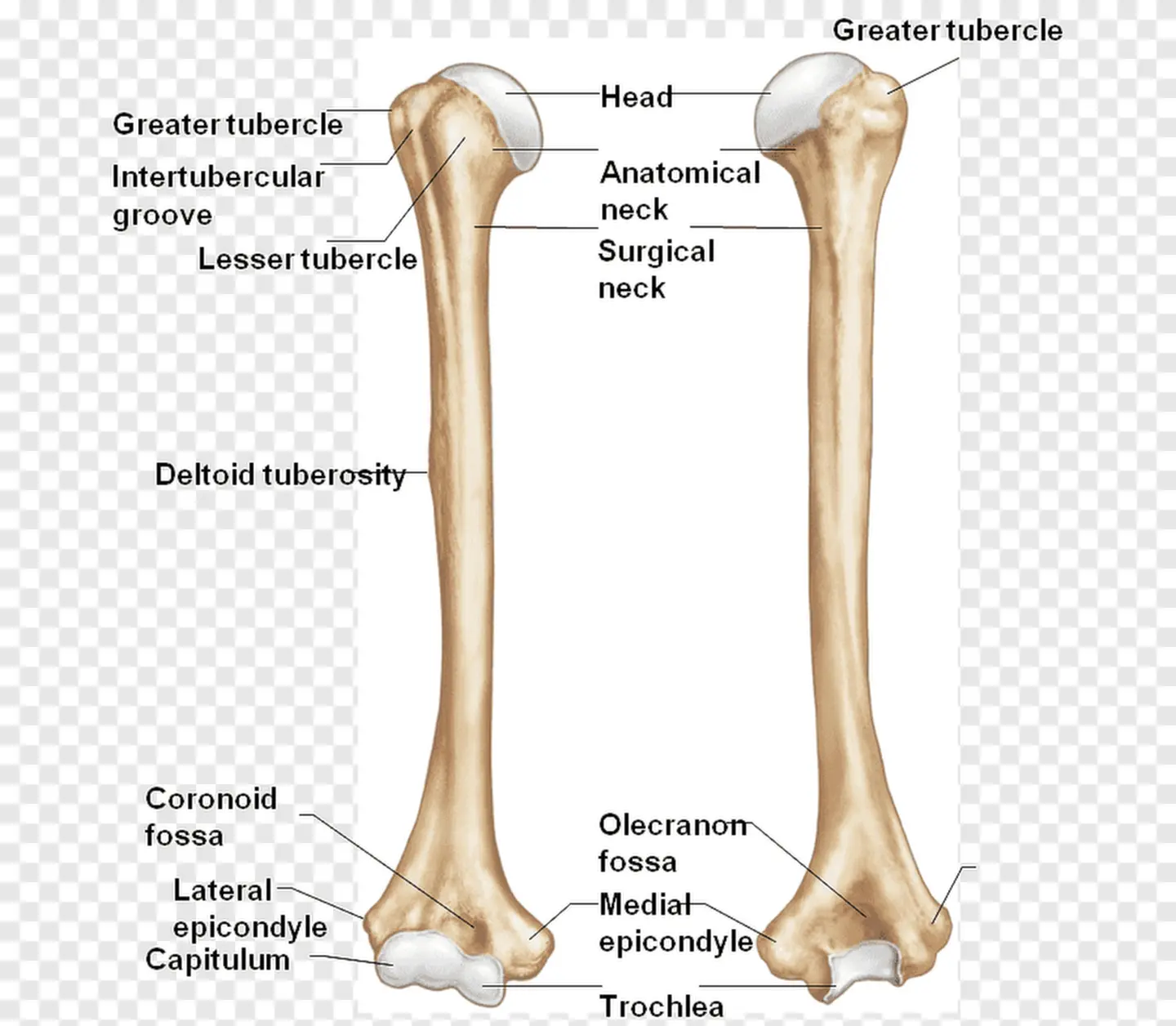
This anatomical feature explains the injury patterns observed. Similar cases of external compression have been described from the use of crutches, poor sleeping positions or tourniquet compression.
The mechanism underlying acute radial compressive neuropathy is attributed to focal demyelination caused by mechanical compression, which can lead to reduced intraneural microvascular flow, impaired axonal transport and changes in nerve structure and function. Sustained pressure precipitates damage to Schwann cells and displacement of myelin.
The minimum time needed for a compressive neuropathy to develop has not been established; in the study, times range from 5 to 25 minutes. Recovery times likewise range from 2 minutes to 5 months.
Further experiments have shown that remyelination occurs faster in cases of compression with a narrow rope than with a wider compression cuff. The type of myelin injury also influences recovery time and can be classified as displacement of the node of Ranvier, partial or complete rupture of stretched paranodal myelin, or intra- or periaxonal edema.
Femoral neuropathy is usually caused by compression at the inguinal ligament with the hip flexed and externally rotated. Axillary nerve injury is usually associated with shoulder trauma from direct compression or traction, and in the cases studied it was caused by hyperextension of the shoulders. The cervical roots of the brachial plexus are most often injured by closed traction.
As for preventive measures to avoid neurological damage during shibari practice, the study identifies several principles:
First, use techniques that distribute pressure evenly and avoid excessive compression on specific nerve pathways, such as the radial nerve, learning procedures that reduce pressure on critical neuroanatomical areas and limiting the duration of full-body suspensions.
Second, set time limits and check regularly that participants are not experiencing excessive pressure or discomfort.
Third, ensure proper positioning of the body and limbs during practice to minimize strain on vulnerable areas, avoiding extreme angles that put excessive tension on the nerves.
Fourth, establish open communication between participants so that any sign or symptom of nerve compression can be identified quickly, encouraging them to point out any discomfort or unusual sensation during the session.
Finally, provide thorough training in anatomy, nerve pathways and safety, including knowledge of the specific vulnerabilities of certain nerves and how to minimize the risk of damage.
It is important to note that the exploratory nature of the study, together with the small sample size and non-randomized recruitment methods, limits the generalizability of the findings. Nonetheless, it provides valuable information on the nature and extent of nerve injuries in shibari practice and underlines the need for further research.
Conclusions
The study identifies and documents injury to the radial, axillary and femoral nerves in the form of acute compressive neuropathy caused during shibari practice.
The radial nerve was the structure most frequently affected.
The deltoid tuberosity is a reliable and practical anatomical landmark for determining the level of the radial nerve along the back of the humerus. Knowing it can directly help prevent injuries.
Recovery from radial nerve compression injuries varies with the severity and duration of the compression, individual factors and how promptly medical care is given. Most participants saw improvements in motor function and sensation over time.
Timely medical care and safety measures are decisive for optimizing recovery, although there is a risk of recurrent injury if precautions are not taken. In general, the prognosis is favorable, but practitioners must prioritize safety, communication and awareness of risks to avoid new injuries and support optimal recovery.
Reflections on the study
On the study itself
Despite its exploratory nature and small sample—as its own authors acknowledge—the study is of great interest to shibari practitioners.
For the first time, a medical publication identifies the link between nerve compression injuries and shibari practice (Japanese rope bondage, in the article’s terminology).
The study clearly describes the process by which the injuries occur, processes widely studied in other clinical fields. The information on myelin loss and the possible axonal damage involved in this type of condition is particularly relevant.
It puts the spotlight on the relevance of human anatomy in the injury process and on the importance of knowing both anatomy and the technique specific to shibari.
But it also shows that injury requires several factors to come together: compression of the nerve because of posture and applied load, the time during which that compression is exerted, the person’s particular physiological conditions, the handling of anatomy and the technique used.
In the light of this clear, objective, scientific information, I can only reiterate the importance of not accepting as valid everything that circulates online or in unreliable sources.
Diagrams with red, green and yellow zones are nothing more than idealizations without proven scientific basis, and many of the recommendations passed on in courses and workshops are no more than beliefs dressed up as authority.
A notable shortcoming of the study is its authors’ lack of knowledge about shibari, its techniques and its purpose. Reading it reveals a superficial knowledge of the discipline, with conceptual errors more typical of a Wikipedia entry than of scientific work.
Possibly as a result of that same limitation, the study limits the injuries to “full-body suspension,” when such injuries can also be caused—yes, caused—in floor ties.
Along the same lines, the authors seem influenced by the trend that seeks to strip kink of its erotic charge, reducing it to an eccentric pastime.
All that said, this study has considerable value, both for its conclusions and for the precedent it sets in the scientific literature on the most common injuries in shibari practice.
What follows from the study
Reading the study raises several uncomfortable reflections.
The first, already mentioned, is the trivialization of shibari as a technique and a concept, reduced to a romanticized Japanophile fantasy for wealthy, idle adults.
The second, and perhaps more serious, is the obvious lack of knowledge, skill and responsibility among the subjects in the sample. The images illustrating the study speak for themselves.
At first I put it down to the sample being a small, poorly trained group. But a look at social media—“reality” photos documenting actual practice—confirms that the problem is wider.
In an overwhelming majority of cases, images of suspensions show mistakes, technical failures and a disregard for the integrity of the person being tied that is hard to look at.
There is no choice but to acknowledge that this lack of responsibility and these training gaps are a reality on the shibari scene, all the more palpable the more mainstream—in the worst sense of the word—the experience and the more superficial the training.
Shibari is technique, not magic. It is grounded in science, not belief. Not everything goes, and you don’t do it because someone said so or because that’s how I like it.
Learning shibari is not a matter of an afternoon, or a weekend. Consolidating the basic knowledge takes months. Refining the manual skills, years.
Taking on suspensions without the necessary training or skills, with a head full of trivia and superstition, is not mere irresponsibility. It is behavior that can only be considered abusive.
Shibari is an extraordinary practice. Properly guided, a student can apply it satisfyingly and safely from day one. But they must act responsibly, both as a student and as a practitioner.
Finally, it is worth pointing to the responsibility of trainers, especially those who swindle their students by offering training of the lowest quality: courses and workshops in which either nothing is taught—because the supposed trainers know nothing—or they try to pass on in an afternoon techniques that take years to master.
There is a lot to reflect on and a lot of work ahead if we want shibari to be a safe practice and those who come to it for the first time to get a real picture of what it is and what it can offer them.
 EN