

In July 2026, the online publication Kinbaku Today presented an archive of historical Japanese SM magazines, with issues from the fifties and sixties that can be viewed online.
The archive, the work of Zetsu Nawa, brought together six titles in July 2026, each with a short introduction and a list of the available issues. This is what it says about them.
Fuzoku Soshi
A short-lived but influential magazine from the early fifties, devoted to erotic customs, sadomasochism, bondage, fetishism and other forms of sexual nonconformity. It combined fiction, essays, illustrations, photographs, reader letters and personal testimonies, and created a space where writers, artists and readers could explore desires largely excluded from respectable postwar culture.
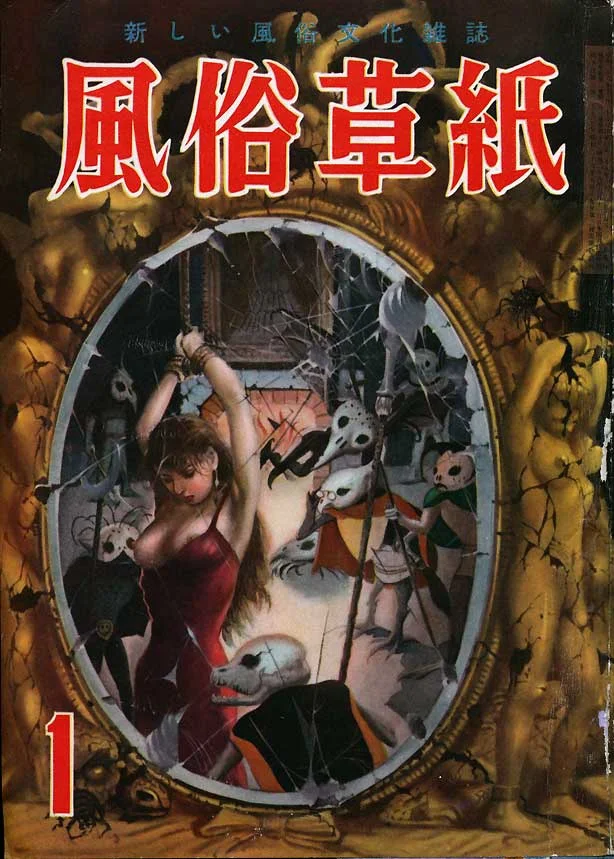
Compared with other, more cautious publications of its day, it often took a more provocative and experimental tone. According to the archive, its pages show the development of early postwar SM imagery and vocabulary and the formation of a scattered erotic community, connected through correspondence, shared fantasies and debate. Although it lasted only seventeen issues, it offers a rare record of how Japanese SM culture was imagined, discussed and organized before the later specialist magazines. The archive brings together twelve of them.
Kitan Club
According to the archive, one of the most important magazines in the formation of postwar Japanese SM culture. Founded in the late forties, it began as a magazine of “curiosities” that combined erotic fiction, crime, medicine, humor, popular science, confession, social observation and accounts of supposedly abnormal sexuality. Over the early fifties, bondage, sadism, masochism, fetishism, punishment imagery and reader correspondence gained ground.
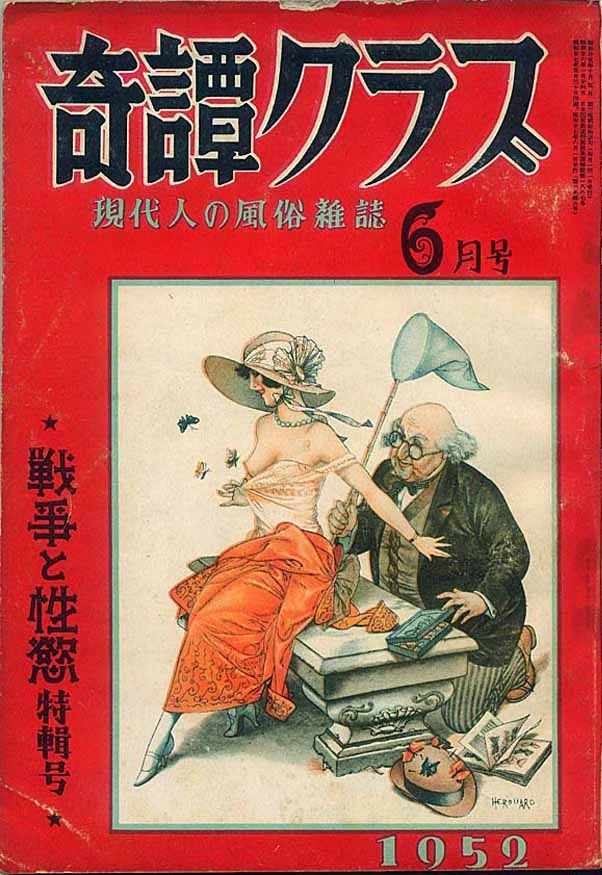
It did not merely document a preexisting SM community: with its recurring terminology, serialized fiction, illustrations, photographs, technical discussions and reader letters, it helped create the cultural field in which Japanese SM could recognize itself as a shared set of desires, practices and ideas. The archive includes 25 issues, from 1953, 1954 and August 1966.
KK Correspondence
A supplement associated with Kitan Club and focused on readers, which placed communication, rather than fiction or illustration, at the center of the publication. It gathered personal confessions, advice, theoretical debate, requests for introductions, proposals for meetings and outings, editorial replies and appeals from readers looking for others with similar desires.
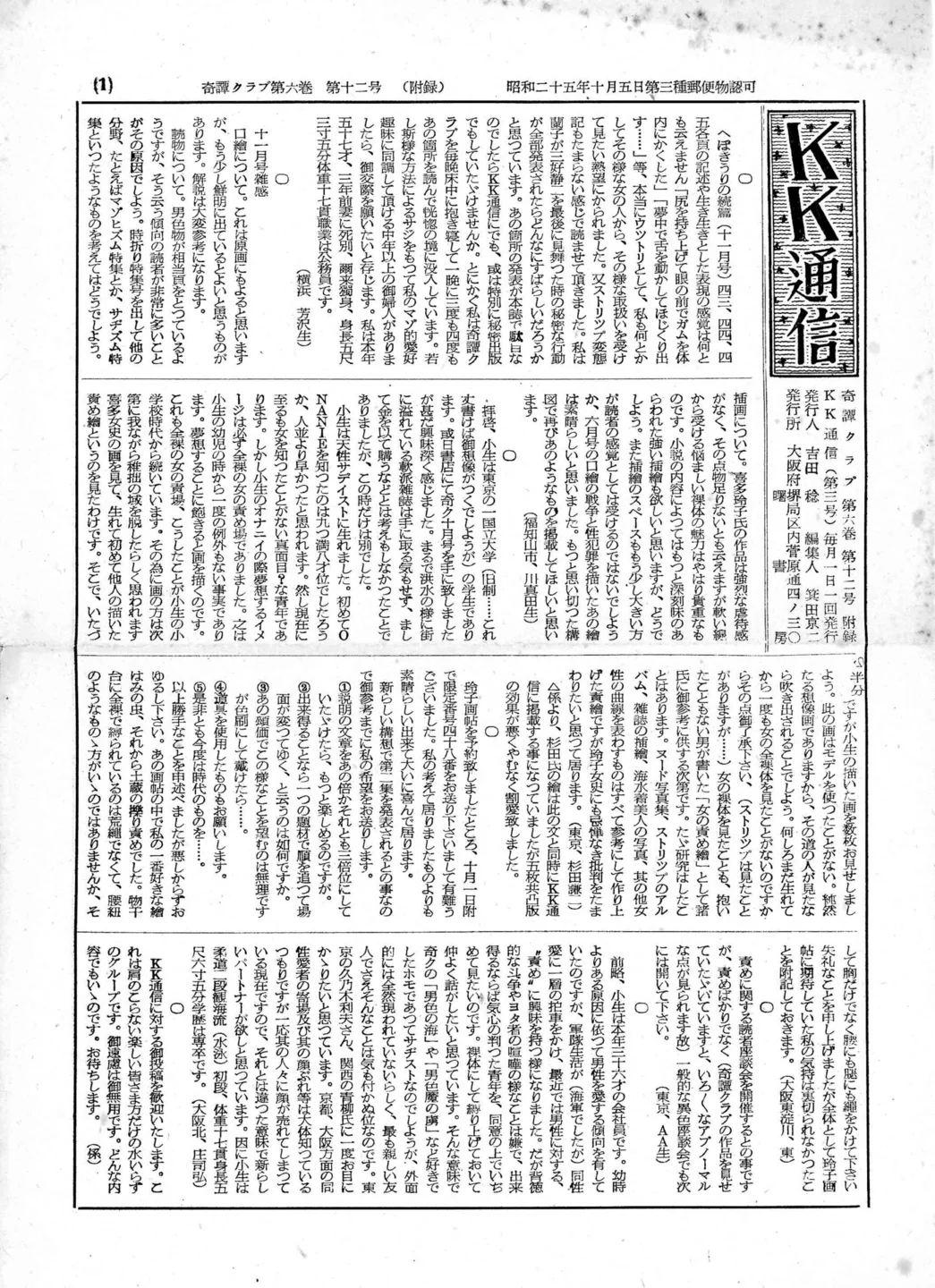
For those who could not safely talk about sadism, masochism, homosexuality, fetishism or other stigmatized interests in their daily lives, it offered a rare space where private feelings could become publicly legible. Readers did not just describe what they desired: they asked who else felt it, what kind of relationship could make it possible and how to tell erotic cruelty from unwanted harm. The archive has six issues.
Sun & Moon
A Japanese SM magazine that combined bondage photography, erotic illustration, fiction and fetish-oriented features. It presents kinbaku as spectacle and as narrative, placing the tied body in scenes of capture, punishment, submission, humiliation and theatrical suffering. Rather than treating rope only as a technique, it uses setting, costume, expression and sequential images to create small dramas marked by fantasy and emotional tension.
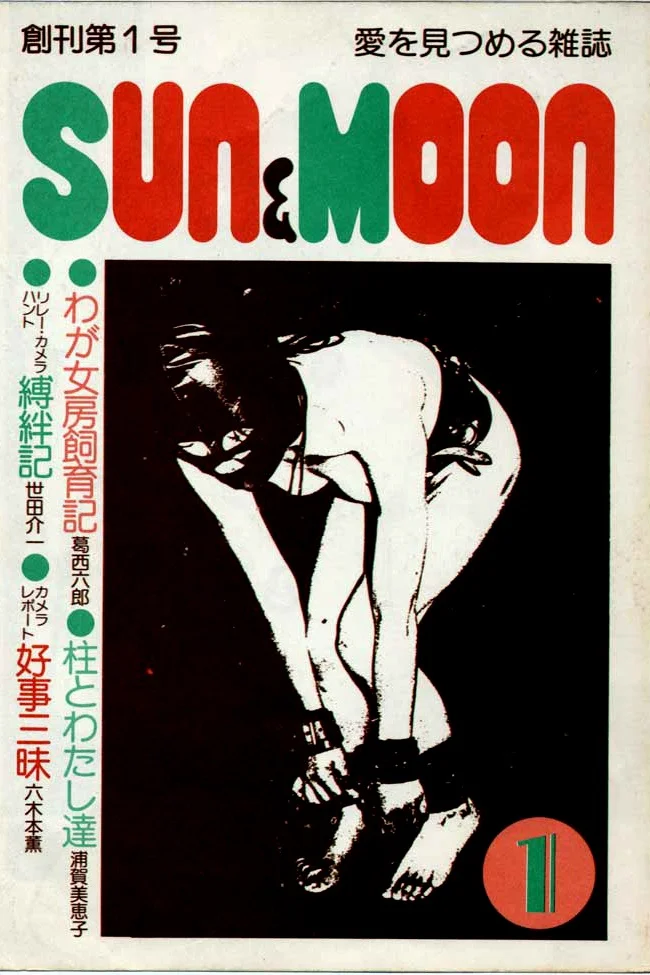
It also reflects the increasingly visual character of Japanese SM publishing, in which carefully composed photographs and illustrated scenarios came to take center stage. According to the archive, it offers a revealing view of the aesthetics, recurring fantasies and editorial conventions through which kinbaku and sadomasochistic culture circulated among Japanese readers. The archive includes five issues.
Uramado (裏窓)
Uramado (“rear window”) was an influential SM and erotic literature magazine, published from the mid-fifties to the mid-sixties. It began in January 1956 under the title Kappa, as the successor to Amatoria, and took the name Uramado with the September 1956 issue. Under the editorial direction of Suma Toshiyuki, better known as Minomura Kou, it gradually moved from true-story material to the more literary and visually ambitious form he preferred. Nureki Chimuo took over as editor in 1961.
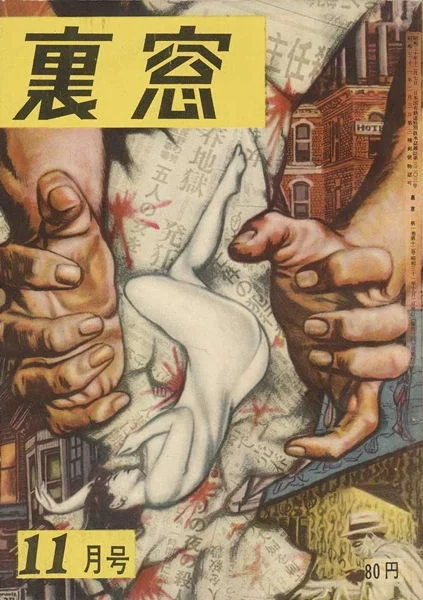
It served as a bridge between the first generation of postwar “abnormal” publications and the more specifically SM magazines that followed. Its pages combined erotic fiction, bondage illustration, photography, essays, confessions, crime-and-punishment imagery and experimental visual narratives. It published major Japanese artists, such as Muku Yoji, Harukawa Namio and Ishizuka Yoshiyuki, and gave unusual prominence to Western fetish art: around 1961, its “Published in foreign magazines” section featured artists such as Gene Bilbrew, Eric Stanton, John Willie, Ruiz and Jim of Switzerland, which made it an especially important site of exchange between Japanese kinbaku imagery and international fetish culture. The archive brings together four issues, from 1956, 1957 and 1958.
Yomikiri Romance
A popular Japanese magazine from the early postwar years that gradually shifted from general erotic and romantic entertainment to material more specialized in bondage, cruelty, fetishism and sadomasochistic fantasy. Although much of its content remained erotic in a broad sense rather than exclusively SM, it was an important transitional publication in the development of the postwar bondage press in Japan.
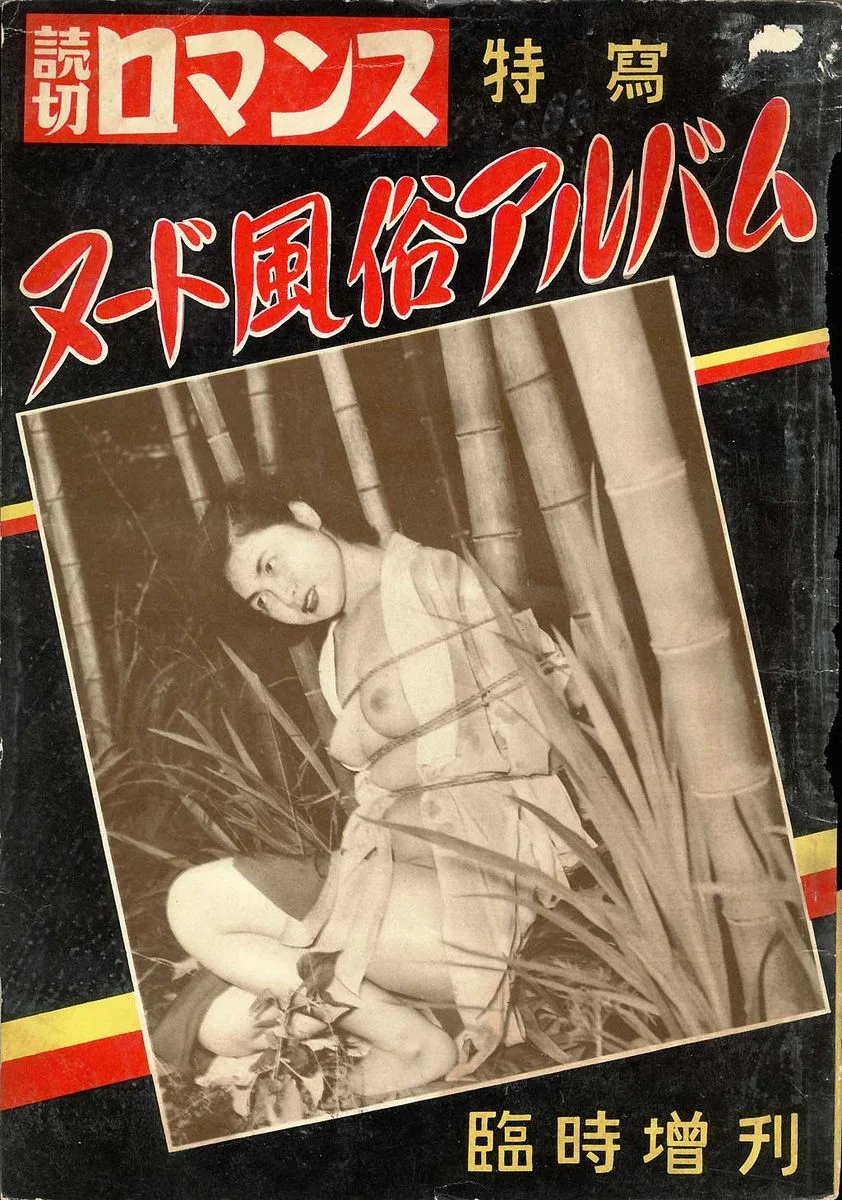
Itoh Seiu was central to that transformation: the magazine published and promoted his historical research, drawings, staged photographs and reconstructions of punishments and ties, and presented him not just as an illustrator but as an authority on the visual history of cruelty. In 1953 he supervised a photographic supplement largely devoted to kinbaku imagery, often identified as Graphic Depiction of Ecstasy in Pleasure and Pain. His work gave the magazine a unique connection to older Japanese punishment imagery and helped translate it into the emerging language of modern erotic bondage. The archive includes four issues, from 1952 and 1953.
 EN